

Envelopes
Fiction by Ann Kammerer
Hello, Callers. Thank you for being here.
In today’s fiction from Ann Kammerer, a young woman seeking direction apprentices herself to a washed-up PI. But as unopened case file envelopes pile up on his desk, she soon discovers the job may not be what it seems…
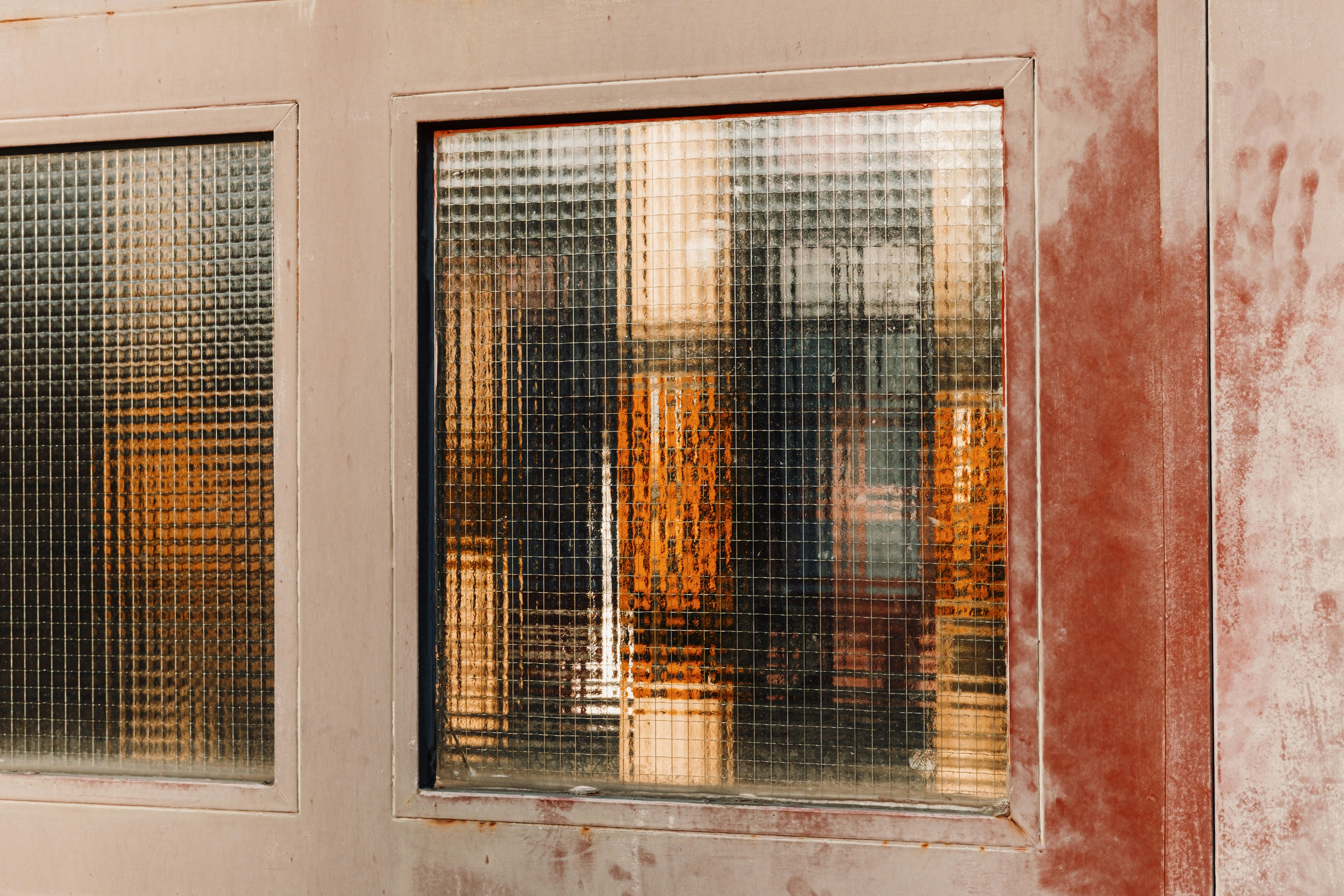
Envelopes
Chapter 1: Deliveries
I knew Donovan would be there, going over papers, the traces of gin hanging in the humid air.
“Donovan’s nothin’ but an old drunk,” my boyfriend Mike said. “He’s just some drinking buddy my dad keeps on the payroll.”
Mike’s dad was a lawyer in a remote northern town. The ruins of a mine shaft tossed shadows over main street, while hunched men and women in worn-out calico emerged from rotted wood houses to wander battered streets.
“You look like a smart girl,” Mike’s dad Mr. Maki said. “Smarter than some of Mike’s other girlfriends.”
Mr. Maki hired me to type and file and run errands when me and Mike moved to Mike’s hometown for the summer. Mike worked for his dad, too, so he could get “real-life” experience before starting law school. One of my biggest jobs was to drop off sealed envelopes labeled “TOP SECRET” to Donovan. His office was a few blocks away atop an ancient diner in a crumbling sandstone building. I took a flight of steep steps off the back to a musty landing heaped with trash and lit by an unshaded bulb.
“Donovan?” I rapped on a warped door above faded vinyl letters that proclaimed: “MITCH DONOVAN, Private Investigator.” Hearing nothing, I twisted the patinaed brass doorknob and shoved the door open over the splintered floor.
“There’s my gal.” Donovan flattened his swollen yellow hands on a scratched desk. He pushed himself up and tucked his wrinkled shirt into his plaid pants. Slipping on a tweed jacket, he realigned his green tie over his distended belly. His hand trembled as he smoothed his greasy white hair.
“So what’d you bring me today?” Donovan’s vinyl shoes squeaked as he waddled over.
“Mr. Maki asked me to bring you this.” I gave him a manila envelope, the center warm from being wedged in my armpit. He set the envelope atop an envelope I had brought the day before, and beside another I had brought the day before that.
“Come. Have a seat. I got something for you.” Donovan sat back down and pushed aside a filled ashtray and filthy coffee cup. He opened a desk drawer and pulled out a clear rectangular bottle and two jelly jars. His eyes brightened as he unscrewed the cap and filled the glasses half-way.
“Here. Your crumb-bum boyfriend won’t care.” He held out a glass and motioned for me to sit in a metal chair. “Come on. The day’s young.”
I looked past his shoulder at an old school clock, the red second hand stuck at 12, the hour hand inching toward 4. His state license with a curled foil seal dangled close by in a dusty black frame.
“OK,” I said. “I guess it’s OK.”
Donovan winked.
“Sure it is. You just tell Mike ‘ole Donovan said it was.”
I scooted forward. Donovan tapped my knee.
“Cheers.” He handed me a drink, then belted his back. His dry lips stretched over his crooked brown teeth as he winced.
“That hit the spot,” he said, waving his hand at the envelopes. “All that work. It can wait.”
Chapter 2: Summer Job
Mike said I drank too much. I didn’t care what he said, and figured it was my business, not his.
“It’s not a problem,” I said. “I’m fine.”
We argued and ground out our cigarettes in an ashtray that Mike had lifted from a bar, nearly burning each other’s fingertips.
“You drink a lot, too,” I said.
Mike scoffed and cracked a beer.
“That’s different,” he said. “Guys can drink more. Girls can’t.”
Mike stood by the window watching a hawk soar above the white pines. He clicked his tongue and said I better get my shit together since we were working the summer in his dad’s law office, that he needed to do good so he could get into law school in the fall.
“Your drinking,” he said. “It looks bad. Plus, you’re gonna wind up like that hopeless drunk Mitch Donovan if you keep it up.”
Mike sat next to me as I watched TV. He rubbed his legs and his cheek pulsed.
“There’s worse things,” I said. “At least Donovan’s a nice old man.”
I tossed the remote on the cushion. When I stood up, Mike stood up, too.
“No he’s not,” Mike said. “He’s just a worthless alchy.”
I walked to the kitchen. Mike followed me, his breath hot on my neck.
“The guy’s delusional,” he said. “And my dad’s even worse, letting Donovan think he’s still some crack private investigator by giving him all those fake assignments.”
I skirted past Mike, remembering the thick manila envelopes Mike’s dad gave me every day, telling me they were critical, that he was counting on me to get them to Donovan, and to not let them fall into the wrong hands.
“Tell Donovan he needs to break this case now,” he had said, “that he needs to prove Mrs. Jaski is screwing the plumber, and the handyman, and everyone else in town—just like her husband says.”
I pushed past Mike and went to our bedroom, slamming the door. The curtains floated in and out, exposing a pink sun that set over the big lake and washed the blank beige walls. Mike swore and threw something, so I dug out the bottle of gin I’d stashed in the closet, the one Donovan gave me when I went to his office.
“Don’t tell your boyfriend I gave you this,” Donovan had said. “He doesn’t need to know.”
I said I wouldn’t. He said he could tell I was good with secrets as he slipped the bottle into my purse.
“Just take a little nip now and again,” he said, his eyes soft, his voice deep and liquid. “It’ll keep your mind off sad things.”
Chapter 3: Brown Bottle Flu
The year I met Mike, I worked at a dry cleaner in my hometown and went to the bar every Friday night to watch TV from a stool. After absorbing “The Incredible Hulk,” “The Dukes of Hazzard,” and three beers chased with schnapps, I slid off my seat to slump by the jukebox, a bottle of Stroh’s wedged between my knees.
“Better sit up.” A guy stood in front of me saturated with colored light, his Sears perma-press shirt tucked in his Wranglers.
“Here. Take this.” He handed me a glass of water and said his name was Mike. I told him to leave me alone.
“You’re a mess,” he said. “Are you always like this?”
I said he was full of it and tried to get up, falling down instead. He righted my chair and helped me to sit. When the bartender said I had to go, Mike offered to walk me home.
I awoke the next morning in my tiny room, tangled in covers, a fly buzzing overhead. My shirt was buttoned and my pants zipped, but my shoes were off. A note was taped to my clock radio, scribbled in pencil and ending with a smiley face and a phone number.
You seemed OK, it said. So I left. Call if you want. Mike.
Sitting up, I rubbed my temples, thinking yes, I remember now, I remember him, how he sat with me and fed quarters into the jukebox, how he said it wasn’t good for girls to get so drunk.
I didn’t remember much beyond that, except how he said he was from up north, that he was down here majoring in English, that he was thinking about going to law school. I remembered nothing about what I told him. Nothing about getting cut off and kicked out. Nothing about how he walked me home along Michigan Avenue to my boarding house, my memory nothing but a painful dimness pierced by morning sun.
“It’s the brown bottle flu,” Mom always said when I was little and wondered why she and Dad never got up on Saturdays, why she told me to go watch cartoons while she and Dad lay half-dressed on a sunken mattress, their arms flung over their faces, the curtains drawn, a scatter of aspirin and toppled beers on the nightstand.
I stayed in bed until a bit past noon, my body a sweat, the birds twittering in distant elms. Getting up, I fished a couple dimes from my desk, then pocketed Mike’s note to walk to the payphone.
“I usually don’t get that drunk,” I told him. “I’m not like that. Really.”
Mike paused. I twisted the phone cord.
“Hey,” he said. “It happens.”
I tried to remember what he looked like but couldn’t.
“Thanks for walking me home,” I said.
Mike talked quiet, his words round and inflected.
“It’s OK,” he said. “You just needed someone to take care of you. At least last night.”
Chapter 4: Hometown Work
Mike came over almost every day after we met at the bar.
Sometimes we drank together. Sometimes I drank alone. He always said I drank too much even though he drank as much, if not more, than me.
“Your problem,” he said, “is that you can’t stop.”
I said I could.
“No you can’t,” he said. “Once you have one, you gotta have more.”
We argued. He talked about people who drank their lives away, that I was doing that, too, that I should go to college and get a better job than simply working at a dry cleaner in my hometown.
“Who are you to say that?” I asked. “Like, you know, you live off your parents.”
We argued more. I told him to leave. He came back with a pizza, and we drank more beer before he went back to his apartment.
Once when we were pressed together, drinking beer in bed, he said he was bored
of living downstate now that he had finished college.
“We should move up north for the summer,” he said. “You know, back to where I grew up.”
He said I could work in his dad’s law office, that he could work there, too, while he got ready for law school.
“I don’t know,” I said. “Let me think about it.”
Mike asked what there was to think about.
“I don’t know,” I said. “I feel funny about leaving.”
Mike sighed.
“Leave what?” He twisted his dry blonde hair.
“My job, I guess. This room.”
Mike kicked back the blankets.
“What’dya mean?” he said. “You got something going with your landlord?”
Mike bolted up and smacked his fists. He grabbed his shoes and stumbled to the door.
“Don’t call me,” he said. “I need to think about it, too.”
Mike didn’t come by for a while. He wrote me a letter, saying he hoped I had changed my mind.
“You’d like it up there,” he wrote. “It’s better than here.”
I set the letter aside, then read it again, studying the tightness of his handwriting. Collapsing on my bed, I drank a beer and fell asleep, thinking about a boy I knew in high school, how he’d toss his black hair and smile and ask me to go for rides in his Cutlass, how it didn’t matter where we were going or what I missed, how it didn’t matter when I got home when we parked at the end of dark starry roads and his hand inched up my thigh.
I read Mike’s letter a couple more times then decided I should do it, that I would move away with him, at least just for the summer, that I could always leave and move back if I had to.
“I think you’re right,” I said the next time I saw him. “I don’t have much to keep me here.”
Mike drew me close and smothered my face in his scratchy wool sweater.
“I’m glad,” he said. “I think you’ll be glad, too.”
Chapter 5: Faux Colonnades
Mike’s hometown was eight hours away on a jagged peninsula of glacial rock.
“It never gets warm up there,” Mike said. “Never.”
When I moved away with Mike that summer, I left everything I ever knew, most of it bad, or at least that’s what he said.
“You’ll be happier with me up north,” he said. “There’s nothing for you here.”
I quit my job at the dry cleaners then settled up rent on my boarding house room. My landlord Ron pushed up his hornrims and said I shouldn’t go, that he’d heard me and Mike fighting and drinking way too much, that it wasn’t good, that it’d only get worse.
“I guess we all gotta figure it out,” Ron said. He stuffed my check in his shirt pocket and stroked his beard. “You can always come back here, if I still got a room.”
We loaded Mike’s car on a hot night thick with katydids. Sipping beers, we drove straight through, down pitch-black roads, arriving at sunrise to a faceless brick building with faux colonnades and lava rock sides. Hopping out, we hauled boxes up cement stairs to a second-floor unit, the rooms beige and semi-furnished, the kitchen harvest gold.
“My dad’s law office is just over there.” Mike pulled back the stained drapes on the aluminum windows. “That’s where we’ll be working for a few months.”
He pointed beyond the birch and aspens to the red stone buildings squatting on a canal.
“And my parents,” he said. “They live way up there. In a fancy place.”
Mike nodded to a tier of homes at the base of a blue mountain thick with pines. An abandoned mine shaft sat on the summit, shadowing a ribbon of road.
“Guess we better unpack some,” Mike said.
He shoved a couple boxes toward me. One was jammed with ashtrays and trinkets and dime store dishes wrapped in newsprint. Another was stuffed with old letters from an old boyfriend and dog-earred paperbacks from high school like “Sister Carrie” and “Winesburg, Ohio.”
“I thought I told you to get rid of some shit?” Mike opened a beer. He unpacked some clothes and put them in the closet, saying he should polish up his shoes, iron up a couple shirts, that I should clean up my clothes, too, that we’d be going to his dad’s office in just a few days.
“I don’t got much,” I said. “You saw everything I had—all crammed in that little room.”
Mike hung up another shirt, then a sport coat and pants with creases.
“I guess it’ll take you time to get adjusted,” he said. “To living with me. To the people up here. You better figure it out.”
Chapter 6: Swatter
Mike wore a light blue suit with a vest, me a gray skirt and thin sweater, on the first day of work in his dad’s office.
We walked across the lift bridge, the cool morning wind messing my hair. White caps ebbed in the canal below, as slivers of clouds sliced the silhouette of a decayed copper mine that shaded the town.
“Guess I should’ve worn a coat,” I said. “Maybe a hat.”
Mike blew on his hands.
“You’ll be fine,” he said. “We’re almost there.”
The office was on Main Street in the upstairs of a triangular building made of dry red stone. The downstairs window was soaped over, and the words “Henrik Maki, Attorney at Law” was etched on the frosted glass door.
Mike worked up front reviewing legal briefs to get experience for law school. I worked in back in a hot stuffy room with a high tin ceiling and large wood windows propped open with dowels. Flies buzzed in and out and pinged against copper light fixtures. Mike’s dad Mr. Maki gave me the job of standing on a stool and smacking flies with a plastic swatter. Sometimes he watched.
“It’s all in the wrist,” he said. “Like this.”
Mr. Maki zeroed in on a fly and snapped, then showed me the yellow ooze on the mesh.
“Remember that now.” He tipped his head toward Mike’s office. “Stick with me. I’ll show you things that bum never can.”
Mr. Maki was short, round and shiny and rubbed sweat from his bald head with a handkerchief embroidered with his initials. He wore navy suits with orange or pearl stripes and shoes that were polished and tight.
Sometimes he yelled for his secretary to bring him coffee or something stronger. He lit his first cigarette at the start of the day and never stopped, blanketing the office with smoke.
“He’s a drunken pig but everyone loves him,” Mike said. “He’s done a lot for this town.”
Once, Mike told me how his dad had worked with an investigator named Mitch Donovan to take on the mining company. The case, he said, involved huge payouts when an elevator broke, plunging dozens of workers to the bottom of a mine, breaking their backs and legs.
“They were there for days,” Mike said. “Everyone figured they were dead.”
His dad made the papers and TV crews swarmed to the town. Families left thank you cards and homemade gifts outside his office, and strung a painted banner over Main Street. “THANK YOU MR. MAKI,” the banner said, complete with children’s handprints. “We LOVE you.”
“My dad could kill someone, and no one would ever care,” Mike said. “As it is, he never has to pay for another drink in this goddamn town.”
Chapter 7: Top Secret
Mike’s dad liked having me and Mike work in his law office while we lived in town for a few months. He said it was about time his good-for-nothing son saw what it was like to really work, to do something more than just go to college, read fancy books, and get drunk.
“Who’d ever think I’d raise such a lazy SOB.” Mr. Maki pushed up his square glasses, then folded his pudgy hands on his belly. “But the real question is why a girl like you would take up with someone like him.”
Mike helped his dad write legal documents and take depositions. When he wasn’t doing that, he drank coffee and smoked. Sometimes he spent time browsing through the law library on the premise he was boning up for law school.
“You know this whole thing is bullshit, don’t you,” Mike said. “It’s like my dad, he has this drunken delusion of us being some dynasty or something.”
While Mike spent his days up front, I spent mine in back typing letters and documents on a grubby blue Selectric. I ran a lot of copies on a sticky Xerox machine that groaned and whirred and flashed lime green light as it spit hot sheets of paper out the side onto a cracked tile floor.
“Feet tired?” Mr. Maki walked by a lot, saying I could sit and take a load off every once in a while.
“That’s OK,” I’d say. “I’m fine.”
He’d scoff then yell to his secretary in the other room.
“Loretta,” he’d bellow. “Bring this girl a goddamn drink. She’s working too hard.”
Loretta ignored him most days, but once she brought me a clear pine-smelling drink in a blue plastic tumbler.
“Here’s a little splash of something,” she said through a tangle of brittle gray-blonde hair. “There’s more in my drawer if you want it.”
I sipped the drink as I fastened a batch of copies with a rusty binder clip and slipped them into an envelope.
“Thank you,” I said. “For the drink, I mean.”
Loretta smiled, and said I could take the envelope over to Donovan now—Mr. Maki’s associate and personal private eye.
“Remember,” she said. “That stuff inside. It’s highly confidential.”
She raised her finger to her lips and shushed, saying I was a courier for a top-secret investigation.
“Come here.” She beckoned me close as her eyes darted from corner to corner. “Not a word. To anyone. Understood?”
Loretta lit a cigarette then winked as she snapped the lighter shut over the blue flame. She sipped on the gin in her desk, and gave me a sip from the bottle, too.
“Go on,” she said. “I’ll tell Mr. Maki you’re on the case. That you’re a good girl and won’t let things fall into the wrong hands.”
Chapter 8: Photo Shoot
I wondered if people watched me as I stepped from Mr. Maki’s office to deliver “top secret” documents to Donovan.
Mr. Maki told me to be on the lookout. Donovan did too. They said people were lurking in stench-filled alleys and around every empty corner on Main Street, just waiting to grab the evidence of all the improprieties in their broken little town.
“Trust no one,” Mr. Maki said. “Except for Donovan.”
Mr. Maki said that Donovan was the best gumshoe around, that back in his day, he always got the dirt on the scumbags and scammers, that he always cracked the case, no matter what.
“He’s still the best there is,” Mr. Maki said. “Despite what anyone thinks.”
Donovan’s office was a short walk from Mr. Maki’s law firm, and on the second story of a collapsing building, up a splintered set of steps.
“Come in my darlin’.” Donovan opened the door before I could knock, the pent-up smoke from his cigarettes pouring out. “And what pray tell did you bring me today?”
Looming in a filthy plaid suit, he tipped a linty blue cap then reseated it on his mess of stringy white hair.
“Just these,” I said. “From Mr. Maki.”
I set two envelopes on a skinny table next to a bottle and a dirty glass smeared with fingerprints. Other envelopes were there, too, in a haphazard stack, all unopened, all the ones I’d delivered as part of my secretarial job.
Donovan shuffled to his desk. He dug through the drawers. His hands trembled
as he lifted crinkled and faded gray photos to stuff into envelopes and give to me.
“Here you go,” he said. “Tell Maki it’s all I got.”
Donovan yanked open another desk drawer and pulled out a scratched and dented Pentax.
“Hold on,” he said. “I’ll get you some more.” Cradling the camera in his thick hands, he crept to the window, then stood to one side to snap a few pictures. Mumbling, he went to the other side and snapped a few more.
“All right then,” he said. “When I’m done, you can take the roll to the drugstore. To Curtis, to develop.”
Donovan edged from the window. Turning toward me, he took my picture as I shifted in my seat.
“Hold still now,” he said. “Just one more.”
He asked me to turn sideways and put my hands on my lap. Leaning forward, he draped my hair over my shoulder with his pudgy finger.
“There,” he said. “Now smile.”
He fumbled with the lens. The shutter clicked. Lowering the camera, his yellowed eyes floated over the top.
“Just beautiful,” he said. “I guess that’s it for this roll.”
Chapter 9: Darkroom
Donovan handed me a spooled-up roll of Tri-X film and told me to take it to Curtis up on the hill. He said Curtis had a secret darkroom in the basement of his drugstore, and never said a word about the pictures that emerged under deep red light.
“You can trust him,” he said. “He’s like you.”
Donovan sat close, his musty wool pants brushing my knee. His eyes welled and he wiped his veiny nose on the back of his mottled hand.
“These pictures,” he said. “They’ll show I caught the bum.”
I nodded and said that was good, that it meant he was still a good at what he did. He tapped my nose and winked.
“OK, my angel,” he said. “Be gone.”
Shuffling to his desk, he poured the last of his gin. When I pulled the door shut, his silhouette obscured the faded letters of “MITCH DONOVAN, Private Investigator” on the frosted glass.
A cold wind blew over the big lake as I angled up the steep road to Hill Top Drugs. When I got there, neon buzzed in the oblong window, while crinkled leaves swirled from the roof of a brown two-story towering out back.
A string of jingle bells chimed on the door as I wandered in to weave through aisles of metal shelves half-stocked with pills and powders. A basket of condoms and K-Y Jelly was near the register.
“What you need?” A man in a white medical coat edged from behind a tall counter, and circled an end-cap of dusty bagged candy.
“Curtis,” I said. “I’m looking for Curtis.”
The man rubbed his beardless chin, bringing his thumb and forefinger to a point.
“I’m Curtis.” His black shoes squeaked as he took a slow step.
“I need to drop this off,” I said. “For Donovan.”
I held up the Tri-X. Curtis leaned in, his pock-marked face soaked with fluorescent light.
“That drunk old coot.” He snatched the roll with his pasty fingers. “I told him not to send me anymore.”
His cheeks rippled when he shook his head.
“I guess you don’t know,” he said.
I asked what he meant, that I had just moved here for the summer with my boyfriend, that I was working in his dad’s law office.
“My boyfriend’s dad,” I said. “Mr. Maki, I mean. He gives me things to take to Donovan. Important things, he says, for important cases.”
Curtis frowned. He wagged the roll of film in my face, saying he had
something I could deliver, too.
“Tell Donovan this is it,” he said. “No more.”
I stepped back, bumping into a shelf, knocking bottles and boxes to the floor. Curtis bent over to pick things up, then wiped away dust with his sleeve as he put things back.
“Oh all right.” His eyes softened as he told me not to worry. “Come back tomorrow. I’ll have his pictures. whatever they might be.
Chapter 10: Tri-X Palette
Loretta said Curtis called the office to say the pictures were ready to pick up, the ones I dropped off at Hilltop Drugs the day before.
“Better go get ‘em,” she said. She rolled from behind her Selectric and lit a Marlboro Green. “Donovan’ll be waiting.”
The phone rang. She answered after three.
“Henrik Maki, Attorney at Law.” She went on, lying to the caller that Mr. Maki was out even though I saw him earlier, drinking scotch and smoking a cigar, his tightly laced shoes propped on his desk.
“Go,” she whispered. “Skedaddle.”
I grabbed my purse and headed to the door. I walked past my boyfriend as he sat behind a desk in his blue polyester suit, the one he got from JC Penney right before we moved up north to work for his dad.
“Where you going?” He tapped a pencil on a legal pad, and asked what his dad had me doing.
“I’m picking up pictures,” I said. “For Donovan.”
Mike stared over a leather-bound law book.
“There’s none of you is there?”
I told him maybe, that Donovan took a few, telling me it was part of his key investigation for Mr. Maki.
“Well bring ‘em back,” he said. “Don’t let that old sot keep ‘em.”
When I got to the drugstore, Curtis was ringing up a middle-aged woman wearing a polka dot shift. He said he’d be right with me.
“Anything else, Mrs. Jaski?” Curtis said. “We aim to please.”
Mrs. Jaski smoothed her bouffant and twirled an opalescent earring.
“No,” she said. “Maybe next time.”
She dropped a bottle of pills in her vinyl purse and clicked it shut. Her velvet perfume lingered in the disinfected air as she eased out the door.
“OK then.” Curtis rapped the counter then pointed at me. “Pictures. You came for pictures.”
He clicked his tongue and pulled an envelope from a bin.
“Tell Maki, or better yet, tell Donovan, to quit sending me these to develop.” He went on. “Everyone knows,” he said, “Donovan’s no PI anymore.”
I took the pictures and left. I got a beer at the party store, then wound my way down the hillside to watch long boats sail toward the big lake. Sitting by the canal, I slid one glossy behind the other. Some were focused, others blurred. Some were of men in pilled suits or oily Carhartts, taken from Donovan’s upstairs window. Others were of women at street level, framed from the waist down. I scanned through ones of off-kilter houses with rusted cars out-front, the ones of misshaped clouds, and the ones of his scuffed brown shoes bumping up against chicory on cracked walks.
And then, there were the glossies of me, my face a pale beacon in the Tri-X palette, my smile caught in filtered light as he snapped the Pentax and sipped his gin, his voice a graveled echo, saying I was beautiful, that I was his angel, that he knew I had moved to town just to be his girl.
Chapter 11: Big Dogs
Mike and I drank after finishing up work at his dad’s office. We headed to Ripley’s Bar to sit on cracked vinyl stools, our elbows propped on a sticky bar, our skin aglow from the red tinseled walls.
“Hey, aren’t you Maki’s kid?”
A man in a flannel shirt sidled up beside us. Mike feigned a smile. “Your dad is one tough SOB,” the man said.
The man went on, praising Mike’s dad, reliving the legends of esteemed attorney Henrik Maki and Mitch Donovan, his crack private eye, how they took on the big dogs and won case after case for the little guys who busted their backs and darkened their lungs in the deep copper mines.
“Yep,” the man said. “Your dad took no guff from nobody.”
The man slapped Mike on the back. He bought us a round and lit our smokes. We listened some more then went home to argue, Mike getting mad that no one could see that his dad was a pig, that Donovan was, too, that nobody could see what drunken old fools they’d become.
“I don’t know,” I said. “I mean, they’re nice to me. Like they seem OK.”
Mike crushed his beer can. He said I knew nothing, that I was stupid and naïve, that we never should’ve come up to live for the summer, that we should’ve stayed down-state, worked there, that we didn’t need his dad’s help.
“I thought you got it,” he said. “But I guess you’re nothing but a big drunk, too.”
I took my beer and went outside, leaving Mike to rant as I staggered down the slope. My head spun so I sat and looked up at the black milky sky, wondering why I had moved in with Mike, why I had left my hometown, thinking about Donovan and how we would visit when I stopped by his office, the door always open, smoke curling through the cracks.
“There she is,” he’d say. “My angel.”
Sometimes, he’d be standing, sometimes, he’d be sitting, furiously itching the patchy red welts on his arms and neck. He’d smile and invite me to sit, pouring two drinks, saying I looked sad.
“Don’t let that Maki kid get you down,” Donovan would say. “He’s a spoiled ingrate.”
My eyes watered and I started talking, telling him about a boy back home, how I had loved him but didn’t love Mike, how I wasn’t sure why I did the things that I did. Donovan took my hand, his wrinkled skin yellow against mine.
“I guess we do things,” he said. “To keep from feeling alone.”
Letting go, he raised his drink.
“Don’t worry my angel,” he said. “We all have a way of finding who we need.”
Chapter 12: Wonderful Life
Donovan wasn’t there the next time I went by to drop off documents marked “CONFIDENTIAL” from Mr. Maki’s office. He wasn’t there the next day either, or the next, so I knocked hard and called out his name, hearing nothing but my echo on the crumbling plaster walls.
Every day, I laid an envelope outside his office door, then waited, thinking I’d see him laboring up the steps, stopping half-way to wipe his forehead and take a drink from the bottle of gin he kept in the pocket of his plaid jacket.
“Hello my angel,” he’d say, his smile softening the deep wrinkles of his sallow face.
“Hello Donovan,” I’d say, but every day, there was nothing, ‘cept for a dusty slice of afternoon sun on the thin wooden stairs.
When I got back to my job, Mr. Maki’s secretary said not to worry.
“He disappears sometimes,” Loretta said. “That’s just Donovan.”
Loretta started typing, then looked at the clock.
“Go ahead and go,” she said. “You oughta get something from dating the boss’s son.”
Mike and I went home to our apartment across the canal and up the hill lined with old growth pines. We ate leftover pizza from Ginos, and a few stale Oreos for dessert. Afterward, we sat and quietly smoked, tapping our fingertips on our cans of Stroh’s.
“What you and Donovan talk about all the time?” Mike exhaled then crushed his cigarette on a plate.
“Nothing really.” Pushing my chair back, I cleared the table and started doing dishes.
“I keep telling you. He’s just a big drunk.” Mike lit another smoke. I rinsed a plate and wedged it in the dish drainer.
“So what?” I said. “He’s still a nice old man.”
Mike coughed as I folded the dishrag over the faucet.
“All that stuff,” he said. “That my dad has you take him. It’s all made-up bullshit.”
I shut the cupboard and pressed my forehead against the front.
“I thought you knew it was all a big fake, that there’s no investigation.” Mike came up behind me and touched my waist. “My dad just keeps him on, kinda like Uncle Billy in ‘It’s a Wonderful Life.’”
Mike’s hand crept up the back of my shirt. I pulled away, telling him to stop.
“What’s wrong with you?”
Mike pushed me aside. He picked up my beer and threw it, telling me I drank too much, that he knew I was drinking with Donovan, too, when I dropped things off.
“I guess you haven’t heard,” he said. “They found him. Your sweet ‘ole man. Dead drunk in the alley. He’s in the hospital now. Calling out for you. Wondering when his angel is coming by.”
Chapter 13: Bender
They told me at the office that Donovan was on a bender, that he did that sometimes, vanishing into his old neighborhood up by the mine to hole up and drink 5 O’Clock Gin.
“He’ll turn up,” Mr. Maki said. “Don’t you worry. He always does.”
Cops had seen him all about town taking pictures with his dinged-up Pentax. They told him to go on his way when they caught him crouched in the bushes surveilling City Hall.
“I’m doing an investigation,” he said. “An important one. For Henrik Maki’s law firm. Just ask him.”
The cops smiled and nudged him with a baton.
“Sure, sure,” they said. “Move along now.”
Donovan fiddled with his worn felt hat and shuffled up the hill, his scuffed wingtips caked in mud. Stopping half-way, he stood in the shadow of the mine shaft to look back at church steeples rising over the sandstone buildings and the cupula of a shuttered school. He scavenged a cigarette butt from the pavement, then pulled a bottle from his jacket to feign a toast to the fading blue sky.
The cops found him a nighttime later slouched in an alley, his filthy plaid sport coat torn at the shoulder. Barely breathing, a thin trail of vomit oozed from his mouth and onto his camera, slung around his neck.
“Didn’t I tell you he’d show up?” Mr. Maki winked and watched me type. He shouted to his secretary to get him a drink, and to get me one, too, then shook a couple cigarettes from a pack of Marlboros.
“Here,” he said. Handing me a smoke, he smoothed the last few hairs on his moon-shaped head before lighting his cigarette then mine.
“Go visit the old coot,” he said. “He’s at St. Joe’s, third floor.”
Mr. Maki went to the window. A few pigeons cooed on the tar paper roof, then flapped toward a distant chimney when he hissed and blew smoke through the screen.
“Pestilence.” Mr. Maki shifted his weight from one stubby leg to the other. He crushed his cigarette on the windowsill and called Donovan a sentimental old fool.
“He never did get over that Maggie, that O’Sullivan girl,” he said, twirling his wedding ring. “I told him all along she’d be nothing but heartache.”
Chapter 14: Maggie, Sweet Maggie
Mike wouldn’t go with me to visit Donovan in the hospital. He said he could visit a drunk any time he wanted, now that we were working for his dad.
“Save yourself a trip,” he said. “Just go in there.”
Mike pointed to his dad’s office and glanced at his wristwatch.
“He’s probably drinking his lunch right now,” he said. “Just like he did with your buddy Donovan, back when they were doing their so-called ‘private investigations’ in the good ole days.”
I hiked my purse onto my shoulder and left, saying not to wait for me, that I’d probably be late, that I’d see him at home.
“Fine,” Mike said. “Spend all night by his bedside. Hell. Crawl into bed with him. See if I care.”
St. Joseph’s was three blocks away from the office and nested at the base of a tiny mountain, its rotted cupula throwing shadow on the sunken steps that led to a heavy carved door.
Donovan’s room was on the top floor at the end of a dimly lit corridor. A heat vent rattled and a buzzer sounded. Rubber-soled feet squeaked behind me, and a nurse skirted by, unwinding a stethoscope from her neck.
I slipped past a rolling cart crammed with trays of picked-over food and into Donovan’s room. A tiny gray box sat on a metal end table, beeping and flashing as a red jagged line marched across the front. Donovan laid flat on a rickety bed, half-cloaked in a striped hospital gown, wires and tubes taped in between the oozing red sores on his chest.
“Hi Mr. Donovan.” I sat down and scooted close.
“Who’s there?” His eyes fluttered and he weakly scrunched the sheets with his milky, brown-tipped nails.
“It’s me,” I said. “From Mr. Maki’s office.”
Donovan blinked his cloudy yellow eyes.
“Is it you?” he said. “My Maggie? My sweet Maggie O’Sullivan?”
His caked white tongue poked through his lips as he weakly smiled.
“No, it’s me,” I said. “From the office. I’m not Maggie.”
Donovan’s head swished on the pillow. Staring at the ceiling, he called me Maggie again and asked if I was wearing the blue dress, the one with the yellow flowers, and high waist and sash, the one I wore when he led me into the moonlight, my hair the softest of strawberry reds, falling and drifting from my shoulders as we danced in a field dotted with chicory and Queen Anne’s lace.
“Maggie, sweet Maggie,” he said. “You were my sweetheart.”
Donovan coughed. His chest heaved.
“I would’ve taken care of you forever, despite what your mother thought. You didn’t need to leave me.”
Moaning, his eyes welled, then closed. The tiny box by his bedside beeped.
Taking his hand, I whispered I was here, telling him I would stay, that we could even go dancing if he liked, that I’d be his Maggie, just for today, his skin cold and sallow next to mine.
Ann Kammerer writes short fiction and narrative poetry. She lives in the Chicago area, having moved from her home state of Michigan with her husband and daughter. Her work has appeared or is forthcoming in Fictive Dream, One Art, Open Arts Forum, Bright Flash Literary Review, Chiron Review, The Broken Spine, 10 by 10 Flash, Cold Caller Magazine, Cajun Mutt Press, and elsewhere.
She’s been anthologized by Crow Woods Publishing, Querencia Press, and Workers Write! by Blue Cubicle Press, and has received top honors and been short-listed in several writing competitions. Her chapbook collections of narrative poetry include Yesterday’s Playlist (Bottlecap Press, 2023), Beaut (Kelsay Books, 2024), Friends Once There (Impspired, 2024), Someone Else (Bottlecap Press, 2024), At the Cleaners (Bottlecap Press, 2025), and Stump (Bottlecap Press, 2025).
Excellent. Great characters.
Good sense of atmosphere, and the story feels like the 1970s or earlier.