

Golden Memories
Fiction by Tom Andes
Hello, Callers! Thank you for being here.
We’re thrilled to kick off 2026 with new fiction from Tom Andes. Winner of the Shamus award and a two-time alum of Best American Mystery and Suspense, our faithful readers may also remember Andes from his interview with us in September.
In “Golden Memories,” the line between friend, lover, and foe is blurred until such distinctions no longer matter. Maybe the only thing that really counts is who ends up pulling the trigger…
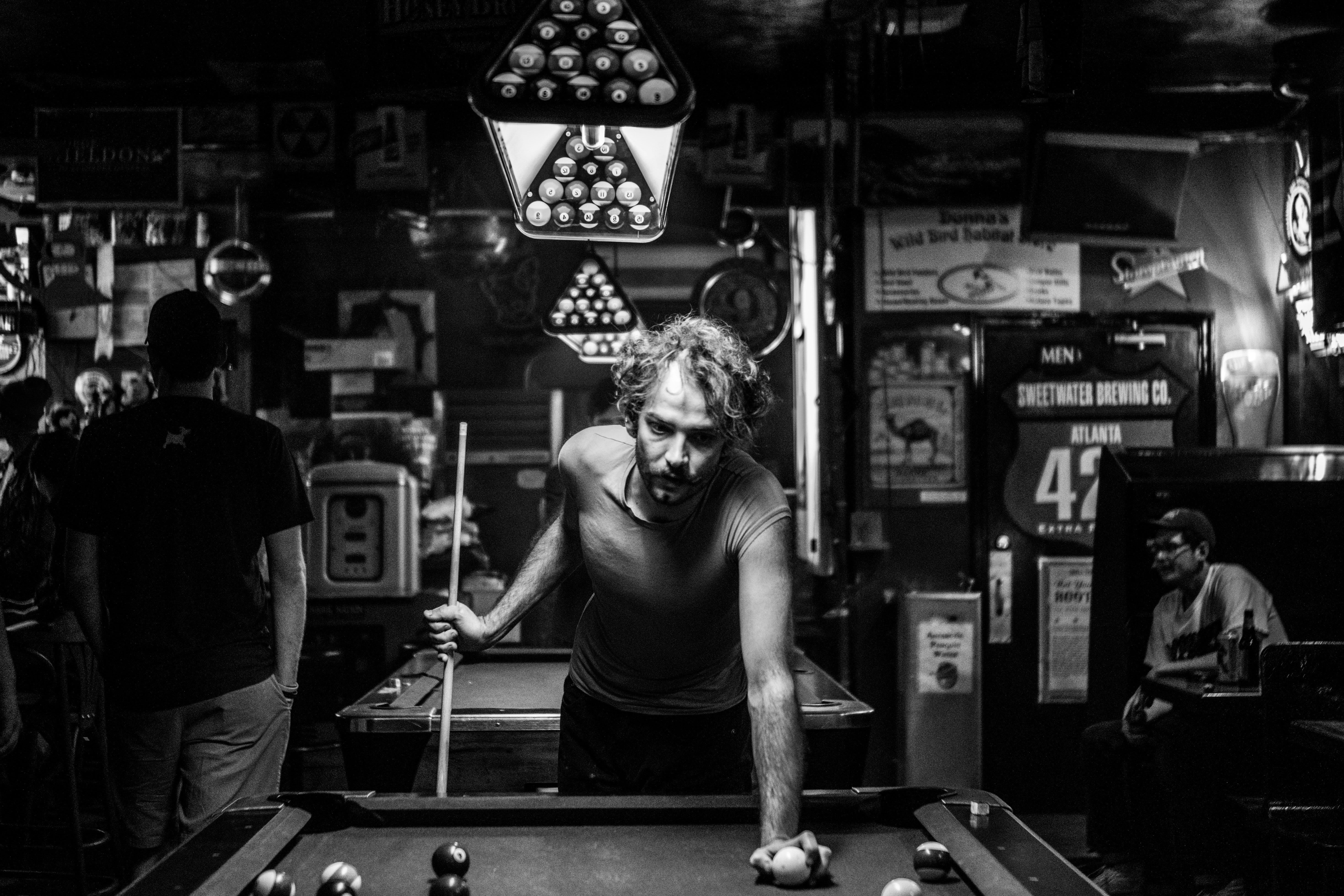
Golden Memories
Joe Henry Walker had been home from San Francisco for three months, two weeks, and four days when Jack Macgowan walked into The Rusty Nail in Portsmouth, New Hampshire—a moment Joe Henry had dreaded, though he’d known it must inevitably come to pass.
“You mind if I sit?” Macgowan asked, pulling out a chair.
Joe Henry couldn’t imagine Macgowan making a scene, though he wouldn’t have put it past him, either. Shaking her head, Jessica watched Macgowan from behind the bar. A look of disgust crossed her face—revulsion, fear, and that cool rage Joe Henry both loved and wanted to avoid. Her chin going hard like a block of pine, her hands trembling, she filled a glass, foam dripping into the tray. Charlie had turned on his stool, and he scratched the salt and pepper stubble on his neck. The new girl, Kyrie, stood by the wait station.
“Go ahead.” Joe Henry waved at Macgowan.
Like I could stop you, anyway, Joe Henry almost added.
Six years since they’d seen each other, and Macgowan sat, grabbing Joe Henry by the back of the neck, like he might kiss him—like they were still good friends, band mates, and rabble-rousers barely old enough to legally drink alcohol. Joe Henry fought the urge to pull away. “How was college?” Macgowan asked.
“I dropped out,” Joe Henry said, still embarrassed by the fact he’d quit UNH after three semesters—as if Macgowan didn’t know that. If he were honest with himself, half the reason he’d bailed on classes and moved to California was to escape the thing that had started blooming between him and Jessica while Macgowan was in Brentwood. An elemental code dictated you didn’t take up with your best friend’s ex, not even if she was finished with your friend for good and forever, like Jessica had said she was with Macgowan, even before the kid had been born, and Macgowan had been sentenced. “Or don’t you remember?”
“Remember, shit.” Macgowan grinned, and Joe Henry felt intoxicated by his friend’s smile, an old familiar pull in the blood. “I’ve been away.”
Joe Henry said he was sorry Macgowan had done time. Drunk, Macgowan had punched a kid in front of Portsmouth Bowl and put him in a coma for three days—a lucky punch or an unlucky one, depending on how you looked at it. Joe Henry wondered if Macgowan was going to clock him. He probably had it coming.
“How’s Elliot?” Macgowan asked, something thin and needful in his expression.
The door opened, cold air blowing in. A car passed, its engine racing and its tires slicing through the slush in the street. Beyond the windowpanes, snow drifted across the charcoal sky, vanishing behind the gold letters on the glass.
“Elliot’s fine,” Joe Henry said. Probably better off without his father. But then Macgowan had never been much of a dad. “You should come see him sometime.”
As if Jessica—or the courts—would ever allow that.
“I don’t think his mother would appreciate me dropping by.”
“You never know.”
He knew—and Macgowan did, too.
“Does he talk about me?” Macgowan asked, that same desperate thing in his face. Joe Henry couldn’t stand to look at him.
“He talks about you all the time.”
It was a lie, but it wouldn’t hurt Macgowan to hear it.
Kyrie walked over to the table. Holding the tray under her arm, she asked if she could get Macgowan anything, and he looked her up and down. Jessica had come out from behind the bar. Charlie watched, the lights shining on his brown scalp.
“Jack, I’m sorry, but you can’t be in here.” Jessica stood off to the side of the table, and Joe Henry appreciated the way she didn’t involve him by standing behind him, which would have made it look like they were on the same side, aligned against Macgowan.
But they were on the same side, weren’t they?
“I’m having a drink with my friend,” Macgowan said.
“Not in here, you’re not,” Jessica said, wringing the bar towel. “If you want to catch up, you can go down the street to Golden Memories. But you can’t do it in here. Please,” she said to Macgowan. “Go.”
“Well, hell.” Macgowan stood. “You could have written,” he told Joe Henry. “I wouldn’t have judged you. A man gets lonely behind bars. But I know men get lonely out here in the big wide world, too. I’m sure freedom’s a fucking bitch.”
He shoved the door open and walked back into the cold with his hands in the pockets of his overcoat and his shoulders hunched, in such a way that Joe Henry could almost forgive him, even if Jessica couldn’t.
She stood next to the table. Her hands shook with anger. She gripped the back of a chair, the tendons standing out in her wrists.
“I don’t want that you two shouldn’t be friends on my account,” she said. “But I can’t have him in here.”
“I understand,” Joe Henry said. He wanted to protect her. At the same time, he felt the vestiges of a love for Macgowan that bordered on idolatry, and he wanted to go after his friend.
Briefly, he allowed himself to pity Macgowan.
“Do you want another one?” Jessica asked, taking his empty.
“I guess I’ll have one more,” Joe Henry said.

That weekend, he moved the rest of his gear out of his mom’s apartment and into the farmhouse Jessica was renting in Newmarket. He didn’t own much: a few boxes of books, some stuff from high school his mother had saved, a couple beater guitars, a Fender amplifier, and his clothes. Everything else he’d sold before he’d moved out west—or pawned before he’d come home.
Sunday morning, he sat with his elbows on the table in Jessica’s kitchen while she poured boiling water from the kettle into the French press. In the corner, on a brick hearth, a cast iron stove put out heat. Elliot stood in the doorway in Cookie Monster pajamas—a Christmas present from Macgowan’s mother that Jessica had grudgingly let the kid wear.
“You understand why he can’t come here, right?” she asked, setting the French press and a pair of mugs on the table.
Assault, she’d called it, when she first told Joe Henry what had happened, and it hadn’t seemed to him that a man could force himself on a woman he’d been sleeping with, anyway. But he’d grown up, and he’d reconsidered a lot of things. Blinking at her in the morning light, he could see the uneven cartilage in the bridge of her nose, which Macgowan had broken that night seven years ago, almost breaking her, though she’d proved too tough for that.
“I understand.” Joe Henry spooned sugar into his empty cup, thinking about what he’d told Macgowan last night: You should come see him sometime. It wasn’t like they were close—more like he’d have to navigate the fact they were going to see each other around. Despite everything, Jessica had insisted he and Macgowan stay friends.
“You’re going to have to get a job.” As if he didn’t know that. She was still wearing her pajamas, and she brushed her bangs, which were going gray, out of her eyes. She was 31, three years older than Joe Henry was, and she’d grown up on a dairy farm in Vermont, though her parents weren’t farmers: her dad taught high school history, and her mom worked with special needs kids. Sometimes she seemed to know so much more about life than Joe Henry did, and he felt like he’d never catch up. Sometimes that ticked him off.
“I’m not planning on freeloading.” He tried not to sound as annoyed as he felt.
Standing next to the table, she straightened her elbow, depressing the plunger in the French press, and he admired her strong wrists, the moles on her forearms. She was tall—nearly his height, which was 5’10”—thin, and sturdy, and he loved her with a desperate passion that frightened him because he’d never felt anything like it. He’d run all the way across the country to escape it—and then run back because that hadn’t been far enough. In the face of those emotions, he felt weak, unworthy, incapable of doing the things love would demand of him.
“I don’t mean to be hard on you.” She sat. Standing next to her chair, the kid put his head on her lap. She tousled his hair. She touched Joe Henry’s face.
“I’ve already got a mother,” Joe Henry said.
Christ, he thought, I’m only going to disappoint you.
“There need to be boundaries,” Jessica said. She brushed hair out of her son’s eyes. He started eating, spooning up Cheerios, the wholegrain kind she bought at the co-op. She’d moved to Portsmouth after she graduated from Hampshire, where half the students lived in tree houses instead of dorms. And then she’d met Macgowan and gotten knocked up, which made it that much harder to get unstuck.
“Boundaries?” He grunted. The word made him feel like he was sitting in a shrink’s office.
“I like it when expectations are explicit. That saves everybody a lot of grief later.”
She poured their coffee—his first, then hers—steam curling from the chipped ceramic mugs. Out the window, a barbed wire fence cut a jagged line through the snow that blanketed the fields behind the house. I could do this forever, Joe Henry thought—but do what, exactly, another voice asked. Sit here, with her, coffee, a warm fire, and a cold morning, he replied. But that was the easy part, he knew, even before the voice told him that.
“I’ve got a line on something at the Stockpot, washing dishes,” Joe Henry said.
Jessica sighed, hardly able to conceal her frustration. “What about Charlie’s?”
Charlie owned a vintage instrument store, Strings and Things, next to Café Kilim on Congress Street. He’d offered Joe Henry a job, but though he’d once frequented the shop as a customer, he balked at the prospect of sitting behind the counter, and not because of Charlie and Jessica’s history, either. He was supposed to be playing music—gigging professionally—not hawking gear to other people who were doing what he’d wanted to do with his life. That was failure: becoming the guy in the guitar store, balding with a ponytail, teaching townie kids how to play “Smoke on the Water” and “Sweet Child o’ Mine.”
“I told him I’d think about it.” He helped himself to the half and half, poured some into his coffee, and sipped, absorbing the first jolt of caffeine through his lips, his scalp tightening.
Elliot slurped milk. Out of his father’s blue eyes, his hair white in the morning light, he seemed to be watching Joe Henry.
One night in February, he’d just finished his shift at the Stockpot, and he was walking to meet Jessica at work. All evening, he’d been fighting a niggling frustration, disappointment, a feeling of going under. He ran into Macgowan on the corner of Press and Congress Streets, the slush on the sidewalk already beginning to creep through a hole in Joe Henry’s boot, the wind slicing between the rows of brick buildings and making him wonder why he hadn’t stuck it out in California, where it was probably 70 and sunny right now, though of course, everybody wanted to live there, which was what made the goddamn place so expensive.
“About that drink,” Macgowan said, like they’d agreed in the not-too-distant past to raise a glass. His hands were thrust in the pockets of his overcoat. Down the street, the lights in the basement windows in Golden Memories glowed, snow banked against the rail.
“How about it,” Joe Henry said, wondering what harm it could do.
Jessica wouldn’t be off for hours.
They sat at a table in the corner of Golden Memories, cans of Pabst in front of them.
“Isn’t it funny how you went to college,” Macgowan asked, “I went to prison, and six years later, here we are back in the same place we’ve been all our fucking lives?”
Opposite was the stage where they’d played once—the Mad Villains—Macgowan swaggering and joking with the crowd the way he did when he got behind a microphone, like he couldn’t help it, leading the band through an improvised cover of “Freebird” to satisfy or perhaps to antagonize a table of rednecks in the back who’d been calling for the song. At the recollection, Joe Henry felt jealous: though he’d been the only person in the band capable of reading a chord chart, much less playing a major scale, as soon as he hit the stage, he cringed, needing something to hide behind. Macgowan’s confidence had always awed him.
“You working?” Joe Henry asked, which was his way of finding out whether his friend really did intend to go straight after that jolt in county. Yet, if Joe Henry were honest with himself, the same thing had occurred to him. Six years later, here they were.
Macgowan scoffed. “Working?” He laughed that inimitable laugh, which sounded as though he were coughing something up. “Enough to keep my P.O. off my back, anyway.”
Joe Henry said he was glad to hear that, though it would have been better for everyone concerned if Macgowan had violated his parole and gone back to Brentwood—better for Jessica and the kid, for Joe Henry, and maybe for Macgowan, too.
“I don’t want to fuck this up.” Macgowan leaned across the table. He wore black knit gloves with the fingers cut off, and the lapels of his overcoat shone. He smelled rancid, like the homeless men Joe Henry had seen in San Francisco.
“Where are you sleeping, anyway?” he asked.
If you believed one story Macgowan told about himself, his father had messed with him when he was a kid, climbing the stairs to Macgowan’s attic room and doing things Joe Henry hadn’t imagined a parent could do to a child, until one day when Macgowan was a teenager, he’d punched the old man in the chest and thrown him back down the stairs. But you couldn’t believe everything Macgowan said. His mother worked at the First New Hampshire downtown, and she’d always spoken to Joe Henry as though he were the only sane one among her son’s friends—and she’d have left if her husband had been doing that, wouldn’t she?
“I’ve been sleeping around,” Macgowan said, his eyes sparking with the innuendo. “But mostly at home.”
“Charlie offered me a gig,” Joe Henry said, dangling it out there like bait. For two years while he’d been in California, Charlie and Jessica had dated, a fact that bothered Macgowan far more than it did Joe Henry.
“You gonna take it?” Macgowan’s eyes glittered.
“I’m thinking about it.”
He’d been thinking about it for six weeks.
Macgowan waved, as though he were fanning away an odor. “I couldn’t work for a black dude.” He dropped the sentence like a gambit, as though he wanted to see what Joe Henry would do. “I know that’s not the right thing to say, but I’m just being honest with you. I couldn’t take orders from a fucking shine.”
Joe Henry clenched his fists under the table. In the artificial warmth of the bar, he started sweating, perspiration beading in the small of his back and under his arms. He reached for his can, but it was empty, and he fiddled with the tab, prying it off. Where the slush had seeped through the hole in his boot, his right foot was soaked, cold, the skin on his big toe beginning to pucker. You racist son of a bitch—but that was Macgowan, always throwing out shots and taking the piss, like Sid Vicious with his swastika armband, and he didn’t mean anything by it.
“Don’t,” Joe Henry said, but the word sounded weak, ineffectual, and whiny.
“You fuck.” Macgowan sneered. “Did you learn to take it up the ass out there on the West Coast, too?”
Considering the stories he’d heard about Macgowan trolling the men who cruised for sex on Peirce Island, Joe Henry figured his friend had some nerve, but he also knew what would happen if he called Macgowan on that point, or if he made the obvious crack about prison: either Macgowan would deny it, or he’d come at Joe Henry across the table and punch him in the face.
“I hated it out there.” He surprised himself by telling the truth, feeling a wave of hopelessness, of bitterness, and at the same time wanting to open up about his failure to his friend, as if Macgowan of all people might absolve him of having crashed and burned in the Bay Area. He’d had an idea of himself playing late night gigs at clubs in the Fillmore, a notion that had no basis in the fact of the city San Francisco was: a place where he’d paid fifteen hundred dollars a month for a ten by twelve room down the street from a clinic where junkies had started lining up at five o’clock in the morning, grown men crapping on his doorstep.
“I went to New York once, for about six weeks.” Macgowan crumpled his can. “Do you remember that?”
He’d moved to the Lower East Side with a girl he’d met at a show, who’d tired of him, so he’d ended up crashing on her couch, he’d later confessed to Joe Henry, refusing to leave until another boyfriend had knocked a couple of Macgowan’s teeth down his throat. Too talented, too ambitious, too smart to stay in Portsmouth, Macgowan nevertheless seemed destined to flop anywhere else. Thinking about the shop on Grove Street where he’d hawked half the gear he’d brought out west—the Martin acoustic that hadn’t covered two months’ rent, the rack of effects pedals it had taken him ten years to accumulate and five minutes to unload—Joe Henry wondered if the same was true of him.
“How could I forget?” He’d comforted Jessica during Macgowan’s time in New York, fielding late night phone calls, talking her down. Looking back, that was when he’d first started to think something might be happening between them, shared trauma and mutual disappointment in Macgowan bonding them, a thought that frightened Joe Henry, as it seemed to imply that he and Jessica couldn’t exist without Macgowan, that third point by which they triangulated.
“Don’t get morose.” Macgowan took Joe Henry’s empty. “You want another, buddy?”
Joe Henry dug his phone out of his pocket—midnight, and he’d received no word from Jessica, which meant customers were probably three deep at the bar. If she rang for last orders at a quarter of two, he would have till two thirty to get there. If he missed her, he’d be stranded in Portsmouth with Macgowan. It was a twenty-minute drive to Newmarket.
“Yeah go ahead,” Joe Henry said. You lie down with dogs, his father had once said of Macgowan, the old man shaking his head, like he’d invented the figure of speech. But he’d dipped his wick in the woman who answered the telephone at his chiropractic office, leaving Joe Henry’s mom high and dry, so what did he know? One more, Joe Henry thought. What harm could one more do? “Hit me again.”
Macgowan grinned, and in spite of himself, Joe Henry did, too. He felt that old magic, the same way he had onstage with Macgowan. Thinking of the uneven ridge of cartilage in Jessica’s nose, he looked at Macgowan’s hands, the knuckles thick with scar tissue, and he felt a pang of remorse, wondering how Macgowan had done that.
Once. He’d beaten her up once. But that was still too many times.
While his friend walked to the bar, Joe Henry started typing Jessica a text: Ran into Mac. He deleted it and typed another one: At Golden Memories. She’d know what that meant.
He sent the text, folded the phone, and dropped it back in his pocket.
Joe Henry nursed his second can.
“She can’t keep me from seeing that kid forever,” Macgowan said.
Actually, what with Macgowan’s record, and the fact he’d never sent her a lick of child support, she could, or at least she could make it difficult for him to spend any time with Elliot—but Joe Henry didn’t say that. Nor did he ask his friend why he wanted to see the kid in the first place, since Macgowan had never expressed any particular interest in being a father. Like everything else he did, his need to see Elliot seemed a gambit, a power play, and a way to insert himself into a situation where he wasn’t wanted.
“She’ll come around,” Joe Henry said, not believing so himself. “You’ve just got to give her time to see that you’ve changed.”
But had Macgowan changed? Joe Henry finished his beer, wondering.
“You’re a lousy liar.” Macgowan burped. “Your round.”
And where were the other Mad Villains, who’d enjoyed brief infamy in the Seacoast music scene and recorded one vinyl seven-inch, “Pissed Off and Hard Up,” before dissolving? They’d had a classic sound, like those Stiff Records bands from London in the late 70s, but they’d done their own thing, too.
Davy, the drummer, had moved to Atlanta and started a family. Lydia, who’d played bass, had moved to Portland with a girlfriend.
“It’s just the two of us.” Macgowan drank his third beer. “You and me—we’re the only ones left.”
“I haven’t touched a guitar in months,” Joe Henry said.
Macgowan’s face changed, foreshadowing something, Joe Henry didn’t know what. “If you need to sell anything, a guy I did time with just got out, and he can move stuff. It doesn’t matter where it came from. Do you get me?”
And there it was. He could have laughed. To think he’d actually believed Macgowan might be serious about staying out of jail and working his way back into the kid’s life.
“So you’re what, a fence?” He felt a burst of anger at being so easily fooled, but he felt relieved, too. Macgowan didn’t stand a chance.
Macgowan leaned closer. “If it was anybody but you, I’d probably be back in prison on a murder beef by now.”
“I love you, too,” Joe Henry said. After three beers, he felt drunk enough to joke with Macgowan. In his pocket, his phone rang, but he ignored it.
They were walking up State Street with their arms wrapped around each other’s shoulders when Macgowan stopped to piss in a snowbank, and Joe Henry thought again of those rumors he’d heard about Macgowan on Peirce Island. In Macgowan’s telling, he’d let a couple guys cruise him, beaten them up, and taken their money.
Later still, they were banging on the windows of The Rusty Nail, but it was dark inside—three o’clock in the morning—and Joe Henry had missed his ride.
Disoriented, Joe Henry woke on leopard-print sheets in a room that was gradually becoming familiar, and which he was learning to think of as theirs, not hers. On his side of the bed, the Robert B. Parker novel he’d been reading, The Judas Goat, sat tented next to the vintage lamp he’d brought from his mother’s. On the other side of the bed, Jessica’s alarm clock read 10:11. Joe Henry glanced under the covers: he was wearing his pajamas. Good. He’d made it home, and he’d managed to get undressed. In a panic, he sat up, his head pounding. Despite the cold, his skin was slick with sweat. He had no idea how—or when—he’d gotten there.
The phone ringing—that’s what had woken him. When the machine picked up in the other room, he heard Linda Macgowan’s voice. Macgowan’s mom. What did she want? He couldn’t make out the words.
When he walked out to the kitchen, a fire was going in the stove. He smelled wood smoke and underneath that, coffee. The radio was playing NPR, classical. A year studying Hindemith’s Elementary Training for Musicians, but he didn’t recognize it.
He poured himself a cup from the French press and sat at the table, rubbing his face. Jessica appeared at the kitchen door in jeans and a red down vest with an armload of firewood, and he rose to help her, but she waved him away, her breath trailing over her shoulder and into the cold, the door banging closed behind her.
She dropped the firewood, so it clattered on the hearth. She pulled her mittens off. The cold had brought color to her cheeks. “Do you want breakfast?” She touched his head, her tone so solicitous it made him squirm.
So that was how it was going to be. She was going to let him twist. Disarmed by her tenderness, anticipating her wrath, he wanted to kneel in front of her, throw his arms around her waist, and lift her shirt, pressing his face to her belly. He wanted to kiss the stretch marks Elliot called tiger stripes and beg her forgiveness.
“Are you going to have anything?” he asked.
She reached a Pyrex bowl down from a shelf. Had he woken her when he came in last night? Even when she worked late, she got up between six thirty and seven. “It’s getting to be lunchtime for me.”
“Eat with me, anyway.” Joe Henry wanted her sitting next to him, wanted to feel safe the way he did when she was close to him. He wanted her to reassure him she wasn’t angry with him, that he hadn’t done something wrong by staying out with Macgowan.
“I’ll sit with you while you eat, yes,” she said—a concession. But he’d take what he could get.
“How’d you make out last night?” he asked when she set the plate in front of him—two strips of bacon, three eggs scrambled with cheddar, and a piece of toast—and he thought he might not be able to eat, but he smelled the food, and whatever had been hanging in the balance tipped, the bacon and the eggs stirring not revulsion, but hunger. He picked up his fork and took a tentative bite before he started shoveling the food in.
Jessica perched on the chair next to his. “I walked with three hundred bucks—not bad for a Tuesday night.” She tapped a finger on the table. “One guy got out of hand. Charlie and a couple boys from the kitchen had to throw him out.”
“Yeah?” Joe Henry took another bite of egg, wiped grease from his stubble, and wiped his fingers on the leg of his pajamas. If he’d been there, he would have helped show the knucklehead the door. Good thing she had Charlie, and Joe Henry wasn’t jealous, either. Half the men in the bar would have gone to the mat for Jessica, and they respected her, too. “Anyone we know?” he asked.
She shook her head. She drank more coffee, stood, and walked to the stove, putting the kettle on. Holding a roll of paper towels, she came back to the table. “It’s terrible what alcohol does to some people.” She tore a towel off, handing it to Joe Henry.
Wiping his face, he thought of the smell rising from Macgowan’s jacket. His headache had started to lessen. “Yeah, it is.” He scooped egg onto a piece of toast.
“Do you remember coming home last night?” she asked.
He broke out in a sweat, hoping she couldn’t see it beading on his forehead. Shit, shit, shit. He couldn’t remember anything after he’d walked down the street to The Rusty Nail. Had he taken a cab? What happened to Macgowan?
“I came by the bar, but you were gone,” he said. Blankness, the void followed. Macgowan had pissed in the snowbank, and the two of them had pounded on the bar windows, Joe Henry’s reflection and Macgowan’s on the glass.
She folded her arms across her chest. “I left at 2:45. I tried calling a couple times.”
She didn’t sound angry, rather long-suffering. The phone had vibrated in his jacket pocket. Why hadn’t he answered? Ashamed, probably—he’d felt embarrassed to be out with Macgowan, at the fact one drink had turned into more than he could remember.
“I’m sorry,” he said, all the art gone from his apology, willing not just to beg forgiveness, but also to grovel.
“Don’t.” She held up her hand. “I’ve listened to a lifetime of sorries. I don’t need that.”
The sun shining on the snow out the window hurt his eyes. “Okay,” he said.
“Listen, I told you a long time ago I don’t care what you do with your friend, and I meant that. I’m not going to play the nag. It’s not your fault I dated that fucking sociopath for as long as I did, or that I ended up having his baby. Whatever else I might say about him, I don’t regret that. I thank God for Elliot every day.” She finished her coffee. Across the room, water started churning in the kettle, and she stood. At the counter, she ground coffee and filled the French press, bringing it back to the table.
Joe Henry ate the last piece of bacon, dabbing grease from the plate with a crust of bread. His hands had nearly stopped trembling. He knew there was more, and he waited for it.
“It’s not your fault he hit me, either.” Jessica sat, her hazel eyes holding the morning light. Joe Henry opened his mouth.
“Once,” he said—the word out before he could stop himself. Once, in a rage, Macgowan had done something unforgiveable. That didn’t mean he should be forgiven, but it didn’t make him a monster, either.
Her jaw hardened, and she shook her head.
“You really think that only happened once?” Her voice cracked. The way she laughed made him feel condescended to.
His stomach turned. The summer before Macgowan had gone to jail, the three of them had driven to Lake Wentworth in Macgowan’s Corvair, Jessica clinging to Macgowan as though she were trying to make herself smaller, and Joe Henry had felt briefly that everything was going to be all right. He wished they could have stayed the people they’d been back then, before she’d gotten pregnant and decided to keep the kid and leave Macgowan, and before Macgowan had flipped. Like Joe Henry had glimpsed a better possibility for all of them that year, when they’d been his two best friends: wild, careless, and free.
“Why didn’t you ever tell me?”
As though like Elliot, he couldn’t be trusted with the truth about Macgowan. But he thought with a pang of guilt that he might not have believed her—and he’d known, or should have known, all along.
“What would you have done?” she asked.
He didn’t know—nothing, probably.
“And the other thing?” His hands shook under the table. He couldn’t bring himself to say the word. Yet even the word she’d used—assault—seemed euphemistic. “That wasn’t the only time, either, was it?”
She shook her head. When he touched her face, she flinched, but she relented, sinking her cheek into his hand. Brushing her tears away with his thumb, he felt that same irrational jolt of anger, but it seemed to him that he’d known all along, and only his own willful blindness had prevented him from seeing what Macgowan was.
My hero, he thought.
Then he thought Fine, I’ll do it. I’ll grow up. I’ll take the job at Charlie’s.
Sliding his chair around the table, he held her while she cried, and he thought this must have been what she was holding back, the cost of that strength he’d always admired in her. Grease congealed on his plate, crumbs scattered across the cornflower tablecloth.
Numb, he went back to bed for a few hours before he forced himself to get up and swallow a handful of ibuprofen, so he could help clean the kitchen—sunlight shining in the windows, Sonic Youth’s Daydream Nation on the record player—taking a shower and smoking half a joint before he rode with Jessica to pick up Elliot, and she dropped Joe Henry at the Stockpot.
“Call me when you’re finished, and I’ll come get you.” She kissed him on the mouth. In the back of the car, the kid had his face in a Power Rangers book. The green Datsun belched smoke from the tailpipe.
Inside, he hung his jacket in the break room, and he felt the same frustration he’d felt yesterday as he donned the rubber apron, the rancid grease smelling of vomit. He rounded the corner to find dishes stacked from a late lunch rush, some of them not even scraped: crusts of sandwich bread, pink bits of half-eaten burger. A waitress walked past, adding a few more to the pile.
I’m 28 years old, Joe Henry thought as he lifted the handle on the side of the machine and cranked it open—and a professional dishwasher. Macgowan seemed to be right about everything. Like his friend, Joe Henry was a fuckup, born to lose and destined to fail at anything he tried. He slid a rack of glasses in, slammed the door, and started the cycle.
“Hey,” someone said.
He almost didn’t hear over the sound of the machine. He turned to find Kyrie standing in the doorway, smiling at him, face half-hidden in shadow, a crooked incisor gleaming. A few strands of dyed red hair hung in her face.
“Hey,” he said, the machine loud next to him, so he had to raise his voice. “I didn’t know you were picking up shifts here, too.”
“Just a couple nights.” Her white shirt was missing a button, so a pudge of belly showed over the apron. Her hair was disheveled, her face flushed, and she smelled of something—body odor, but not exactly. Where had Kyrie had come from? Rhode Island. She was a RISD kid, a performance art major who’d done a wild piece involving a sex swing for her senior thesis, she’d told them, showing them pictures at the bar not long after she’d been hired. “Did you make it home in one piece last night?” she asked, and he felt surprised she knew about last night’s escapade.
But of course she did. She’d probably been at the restaurant, waiting with Jessica for him to show up.
At the shocked look on his face, she laughed. “I gave you guys a lift. But you probably don’t remember, do you?” Teasing him, Joe Henry realized—and maybe flirting with him, too. Something conspiratorial was in her stance as she leaned toward him—and she disappeared through the door into the dining room.
Leaving, while he was waiting for Jessica’s car to round the bend from the harbor in front of the restaurant, he saw Kyrie walking up the hill by the Seacoast Repertory Theater, Macgowan’s hand in the small of her back, and he felt a twin flush of revulsion and envy, recalling the spark in Macgowan’s eye at the bar. Everything—including women—had always come easy for Macgowan. Yet, no good could come of Kyrie sleeping with him, Joe Henry knew.
He felt as though he ought to warn her, perhaps to protect her.
He wondered if Jessica knew and whether she would care if she did.
The next night, he called in sick, and two nights after that, he quit, walking out of the restaurant in the middle of a Friday night, waitresses and managers both screaming at his back, but it only served them right: you paid a guy seven fifty an hour, you got the kind of guy who worked for seven fifty an hour—wages that did not compel loyalty.
On Sunday, he called Charlie, and he showed up the following Monday morning for an informal orientation, climbing onto the loading dock behind Charlie’s shop and coming in the back.
“All you really have to do is sit here and bullshit with people,” Charlie said, a cup from Café Kilim steaming in his hand, and he led Joe Henry through to the front of the shop. “You do that, especially a guy like you—good-looking, knowledgeable, and people remember you from the scene around here—and the stuff sells itself.”
The electric guitars hung along one wall, a decent selection of Epiphones and Yamahas, and the vintage Gibsons and Fenders nearer the back. Joe Henry glanced at the price tag on one: twenty-five hundred bucks for a battered—and beautiful—old Strat. He wanted it so badly his stomach clenched, and his mouth was watering. The fret board shone, stains worn into the wood where whoever had played it had habitually fretted notes, those sweet spots that were particular to the chemistry between a player and an instrument—like a woman, Joe Henry thought, thinking of Jessica’s body, of the way she’d tensed and then relaxed when he’d gone down on her, the two of them with half an hour to spare between her taking Elliot to school and dropping Joe Henry at work and making the most of the time that morning. In such moments, they seemed to be in perfect accord, the sex—getting each other off—easy, easier than all the things they had to do when they weren’t in bed.
Charlie kept the acoustic instruments in a room near the back of the shop, where a couple guys he hired gave lessons. When you couldn’t live your dreams as a picker, you taught pimple-faced teenagers who didn’t practice how to play “Stairway to Heaven.” Christ. If that was failure, Joe Henry should be so lucky.
“You want me in here full time?” he asked, surprised to discover how much he wanted that. His mouth was dry—nerves. Not that he was in a position to negotiate.
Charlie set his coffee on the counter, rang up a no sale, and opened the drawer. “You asking because that’s what you’re looking for?”
Joe Henry didn’t know how to answer that question. It astonished him that he didn’t feel jealous of Charlie. If anything, he felt grateful to Charlie for taking care of Jessica the years he’d been gone. Couldn’t have been easy being the only black dude in that scene, surrounded by punks like Macgowan and Joe Henry when he’d been younger, either.
“I guess I’m trying to figure it out,” he said.
Charlie counted the money in the till. He took a twenty from the drawer, wrote out an IOU and stuck it in the tray, and he bumped the drawer closed with his stomach and faced Joe Henry. He wore Converse sneakers, jeans, and a Billabong tee shirt. “I need someone in here Monday to Friday afternoons, so I can work on repairs. You make a commission, on top of your hourly. If you want to sit here and play, you can do that, too.” He shrugged. “Just so you know, I’m not doing this as a favor to your old lady, or even because I particularly like you. You’re here because you make my life easier, and because you can help me sell instruments. We clear?”
Joe Henry nodded.
“We can give it a few weeks and see how it goes,” Charlie said. “All right?”
He extended his hand. In front of the shop, flurries were falling. A pair of mandolins hung in the window, the lacquered brown wood shining under the overhead lights in a way that made Joe Henry feel comfortable. Maybe things could work out for him and Jessica, and even for Macgowan, after all.
“All right.” He shook Charlie’s hand.
A few days later, a storm blew up the coast, snowing them into the farmhouse over the weekend.
“I know he’s fucking her,” Jessica said. They were sitting in the kitchen in the late afternoon, and the power was out. Someone had hit a pole down the street, and yellow rescue lights flashed in the early dusk. A fire burned in the stove. “That predatory son of a bitch—I know he’s screwing her, and he’s only doing it to get at me.”
Joe Henry nursed an Anchor Steam. He hadn’t told her. Hadn’t wanted that responsibility. Probably inevitable she was going to find out, anyway. But why did she care?
“Your friend Jack.” She scowled, striking a match to light one of the gas burners on the stove. A whiff of sulfur filled Joe Henry’s nose. She set the kettle on the range. “He’s fucking Kyrie, the girl who works at my bar—I’m sure of it.”
“Are you?” he asked, though he remembered Kyrie’s disheveled appearance that night at the Stockpot, and he remembered seeing her walk up the hill with Macgowan.
“It doesn’t matter.” Jessica shook her head. Blue flames hissed from the stove, and she took a box of chamomile from the cupboard. “She’s an adult. She can make her own mistakes.” She tore open the Celestial Seasonings and leaned against the counter, her hands shaking. “But I don’t know what I’m going to do when she shows up for a bar shift with a black eye.”
She was looking right at Joe Henry, her gaze too intense for him. He turned the bottle around in his hand, the brown glass sweating, leaving a ring of condensation on the tablecloth. In the living room, Elliot hunched over a book his grandmother had given him, his white hair seeming to glow, even in the fading light. He’d thrown a tantrum earlier, but he was fine now, having seemingly retreated into himself.
“For fuck’s sake,” Joe Henry said.
“I might kill him.” Jessica tore open a sachet of tea, dropped the bag in the cup, and poured in the boiling water. “I might seriously kill him.”
The last time he saw Macgowan that winter, it was late March, and the snow had thawed and then frozen again, so ugly gray puddles of slush lay against the curb. Joe Henry was walking through Market Square, his hands thrust in the pockets of his blue Dickies jacket, a hoodie underneath that, his face chapped from the cold. “Hey, hey.” There was Macgowan’s familiar voice. And he turned to find his friend sitting on the steps in front of the Presbyterian church across from Café Brioche.
“Hey,” Joe Henry said, breaking his stride, but barely, and he wondered if it was obvious to Macgowan how much Joe Henry hated him.
Macgowan hopped off the steps. He wore a leather jacket and a pair of overalls, and nothing—not even a tee shirt—under that. It wasn’t much more than 30 degrees out. Something dangled from a leather cord around Macgowan’s neck.
He swaggered closer to Joe Henry, giving off an odor of alcohol and body odor.
“I was sitting in front of the French place,” Macgowan said. “But they shooed me away. Probably thought I’d be bad for business—scare the tourists off.” He hawked something up and spat it in the snow.
Could you blame them? Joe Henry felt a visceral pull, a disgust that bordered on panic. On stage seven years ago, Macgowan had belted out the tunes they’d written together, songs Joe Henry had never been able to play since, though they’d once had their truths to tell: truths about being young, white, male, pissed off, and hard up. Well, and maybe they still did have truths to tell. He was still white, male, and hard up, anyway. But what had happened to Macgowan?
“Fuck ‘em,” he said, meaning the people who ran Brioche. He wanted to show that much solidarity with his friend. “Goddamn frogs.”
“Frogs,” Macgowan repeated, and he laughed.
“Screw the tourists, too,” Joe Henry said.
Like there were tourists in March.
“Got my dick sucked this morning.” Macgowan leaned closer, as if he were taking Joe Henry into his confidence. “That little piece of ass who works at your old lady’s place—I climbed in her bedroom window and let her give me fifteen minutes of slow head before I pulled out and shot a load all over her tits.” He wiped his nose with the back of his hand, leaving a snail trail of snot across that same fingerless knit glove, mucus rattling in his sinuses. Hawk. Spit. Repeat. “I think I’ve got a cold, though.”
Or AIDS.
Joe Henry cursed himself for the thought, even as he half wished it were true.
“I’ve got to get to work,” he said.
“Charlie’s?” Macgowan asked, and Joe Henry braced himself for something more—a taunt, the slur Macgowan had used in the bar—thinking he’d know what to say this time, and hoping he’d have the nut to say it.
“Yeah, Charlie’s.” He shrugged. Across the street, ice covered the benches where they’d sat as teenagers, their own little scene, like a provincial version of the one in Kenmore Square, and Joe Henry wondered if kids still did that: haunting Market Square. Toward Islington, the sky was clearing. He dug his hands into the pockets of his jacket, drawing it around him as the wind sliced down between the buildings. His face felt numb. “How are you doing, anyway?” he asked.
As soon as he said it, he knew it had been the wrong thing to say, something in his tone betraying not concern for Macgowan, but pity, which was a thousand times worse. Macgowan’s eyes flared, his face went steely, and for half a second, he seemed about to swing on Joe Henry.
“I’ve probably been better,” Macgowan said, and that might have been the most honest thing Joe Henry had ever heard his friend say.
Well, you had your chance, buddy.
“I’m sorry, man,” Joe Henry said.
Even if Macgowan had made his own bed.
“And what do you think you’re sorry for, you sorry son of a bitch?”
In that light, his eyes were the same blue as his son’s—like swimming pool liner—and Joe Henry thought of Elliot sitting at the kitchen table in the farmhouse, spooning up Cheerios while he watched Joe Henry, his hair white in the light falling through the windows.
You psychotic fuck, Davy had called Macgowan, when he found out he’d beaten up Jessica, and he’d refused to play with him after that. After punching Macgowan in the nose during an argument onstage, Lydia had already quit the band. We’ve all moved on with our lives, and you’re still trapped here, trying to be the person you were years ago—but he felt like they’d taken something from Macgowan, like they’d lived vicariously through him, chewed him up, and spit him out when they were finished with him. Our own antisocial tendencies—we’d lived them all out through Macgowan.
Just then, a Trailways bus pulled up in front of Rick’s News across the street. Its air brakes hissed, and a warning signal sounded as the bus came to a stop at the curb, the pitch of the engine changing from a low rumble to a whine as it idled. Behind the tinted windows, the heads of the passengers moved, while in the space between the curb and the bottom of the bus, the feet of the people who were disembarking appeared. A gray crust of road salt and snowmelt splattered the side of the bus, and Joe Henry wondered which way it was going, north to Portland, south to Boston or Lynn, or west toward Concord or Upstate New York. Once upon a time, all he’d wanted to do was get on a Greyhound and get out of town, maybe forever. Now here he was, with no escape plan, with no particular ambition to leave.
When he turned, something flashed, the leather cord Macgowan had worn around his neck dangling from the heel of his hand. He brandished the blade, feinting and parrying at Joe Henry as if at an imaginary foe, delivering a chest high karate kick at the air in front of him, so Joe Henry felt the wind from Macgowan’s boot humming past his chin. Joe Henry flinched, raising his arms and balling his fists, as if to defend himself. Tripping on a crack in the sidewalk, he fell over backwards, catching himself on the heel of his hand and scraping his wrist on the ice that rimed the brick. His hand went numb, and pain shot up his arm.
“Jesus Christ,” he said.
He’s going to kill me.
Panting, Macgowan stood over him, the straight razor gleaming dully in his hand. His face contorted not in fury, but rather as though he were no longer himself, delivering a choreographed series of chops, kicks, and punches. But he didn’t seem to be swinging at Joe Henry anymore. Glancing up and down the street, Macgowan laughed.
“Easy, tough guy.” He stepped back and with a belligerent expression, like he’d proved something, folded up the razor.
“What the fuck do you think you’re doing?” Joe Henry asked. His pulse pounded, and he tasted fear—sharp, metallic. Grinning, Macgowan advanced on him, offering his hand. Joe Henry ignored it. He scrambled to his feet.
“Get a drink with me.” Macgowan dropped the razor on its cord around his neck. “I moved out of my parents’. I’ve got my own place by the tracks. We can get a six-pack, go back there and listen to some tunes. I’ve got the new Flat Duo Jets on vinyl.”
Joe Henry took one step and then another. His knees were shaking, and adrenaline buzzed at the pit of his stomach. “I’ve got to work,” he said.
“Just one.” Macgowan started after him. “We can go by Golden Memories. It’s on the way.”
“I’m late already.” Joe Henry kept walking. He didn’t stop—didn’t even turn to look over his shoulder—until he’d closed the door of Charlie’s shop, the bells clanging behind him.
As if so much glass and steel or even Charlie himself could protect Joe Henry from Macgowan’s rage.
When he got home that evening, he dropped the keys to Jessica’s car in the bowl by the door. Jessica was sitting at the kitchen table with Macgowan’s mother, Linda, who was still wearing the tweed skirt and the blouse she’d worn to the bank: red lipstick, eyeliner, her brown hair styled in a fashion that might have been current twenty years ago. Her face brightened, and she inclined her head in Joe Henry’s direction. She seemed hard-bitten and pragmatic, and he thought of those stories Macgowan had told about his father. What had that woman witnessed, and what had she turned a blind eye to?
The kid stood next to Jessica. His Spider-Man pajamas were folded on the table.
“We’re getting ready to go to the movies with Grandma,” Jessica said, helping one of his arms and then the other into the sleeves of his parka. “And we’ll be back by eight.”
“How are you making out, Joe Henry?” Linda asked him.
“Fine,” he said. The heel of his hand still hurt from falling earlier, though nothing was broken. Seeing her, he felt awful, defeated. Like there was no escaping Macgowan. “I’m going to lie down.”
“You all right?” Jessica asked: smart, beautiful, and above all, honest, and not afraid of what life would have her face. He envied her courage. Maybe he could learn from it.
“Sure.” They would talk later, like they always did, and he would come to understand this in time, too.
In their room, he lay in bed and closed his eyes. He tried not to think about how long he’d been home, but he knew now he was going to stay.
Shamus Award-winning writer Tom Andes is the author of the detective novel Wait There Till You Hear from Me (Crescent City Books 2025). His stories have appeared in Best American Mystery and Suspense Stories 2025, The Best Private Eye Stories of the Year 2025, and Ellery Queen’s Mystery Magazine. He lives in Albuquerque, where he is a working musician. He can be found at tomandes.com.
The dynamic between Joe Henry and Macgowan is messy in the best way. The fact that Joe Henry keeps getting pulled back into Macgowans orbit even knowing what he did to Jessica shows how hard it is to let go of old friendships, especially when theres that kind of history. The razor scene hit hard, that moment where threat and bravado blur together and Joe Henry realizes he's been making excuses for someone who's genuinely dangrous.
Very good character writing. Reminds me of Russell Banks.