

Home Sweet
Fiction by Jessica Slee
Who says you can’t go home again?
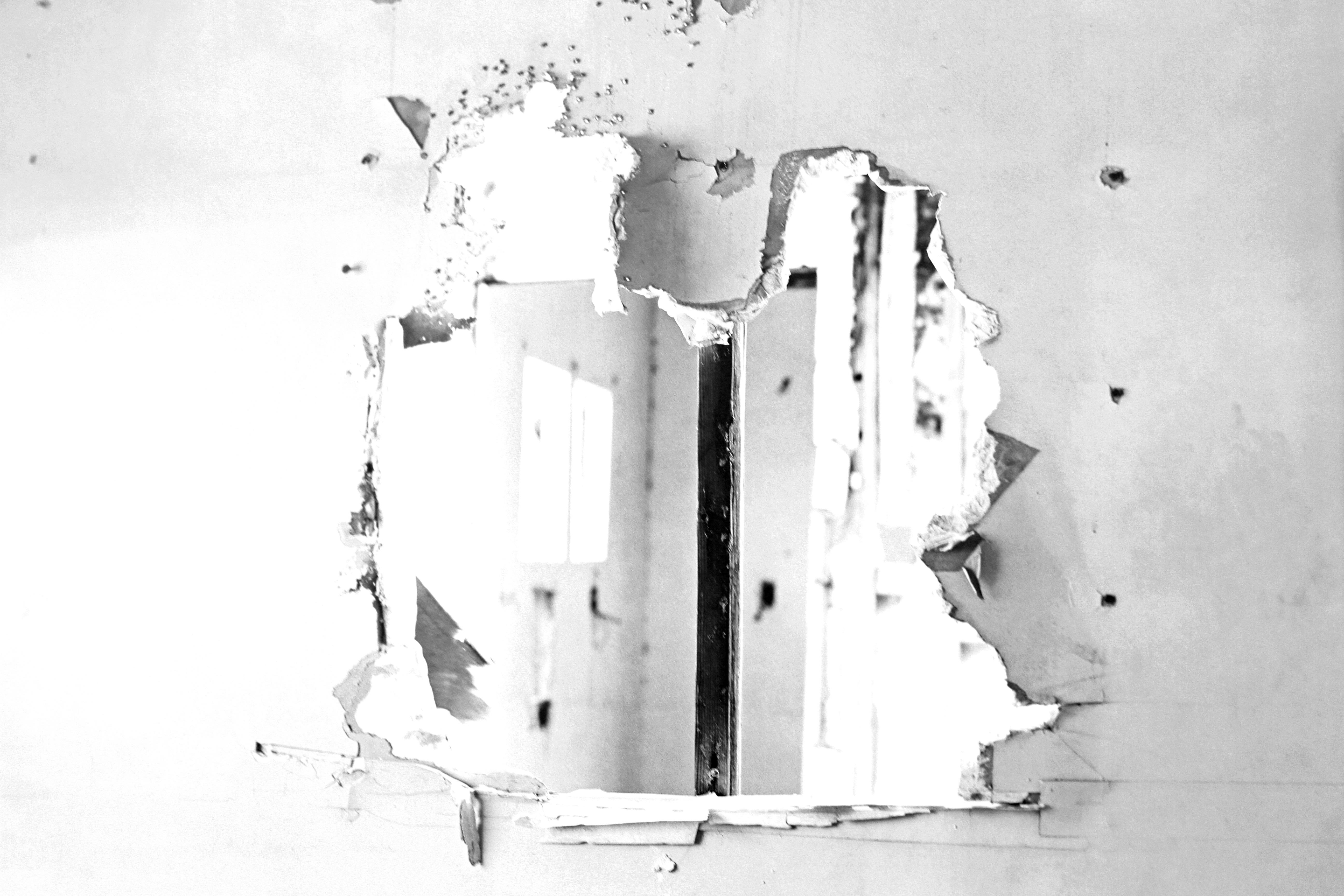
Home Sweet
The drive is nothing like Joe remembers, through single-lane backcountry roads choked with weeds and the hanging boughs of overgrown cypress trees. Inclines so sharp and sudden a car can't go over 35 if it tries. They pass a few familiar sights—a low bridge with the metal railing still crumpled on one side, religious billboards bleached to a near white, and the long-rusted frames of a pair of trucks, missing their tires. To his childhood self, they are landmarks. There's a storm coming in, tinting the world a riotous blue-gray as the late afternoon light slowly dims. The roads had never been kept well to begin with, but thirty years have done a lot to change the landscape. They'd done a lot to change him, too.
Places look different when you’re leaving them. The memories come all too easily—stuffed in the backseat along with everything they could carry, the moment his grandmother had said they couldn’t stay with her anymore, and his mother had packed him up and that was that, despite Joe’s protests and all of his grandmother’s jewelry and china sets and a front closet full of fur coats. She could have afforded to keep them, Joe knows. And barely a day would pass without his mother talking about what the old woman must have done with her fortune, since she never saw a penny of it, and he sure felt the loss of that.
“You all remember the plan, right?”
Before his wife can answer, Henry pipes up from the backseat, “If anyone’s around, we’re family come to grieve. No one says no to that! You just want to show us where you grew up. I’m sweet so no one gives you any suspicion. We’ll be done and gone before the storm hits.”
He looks in the rearview mirror at his son, and his younger daughter in the other seat, a unicorn backpack at her feet. Henry looks at her, expectantly.
“Bethy, your part—”
“I keep people talking while you search the house.” Bethy kicks her feet against the bag. “Just keep asking questions, like you said to do.”
“You’re good at that,” says Henry.
Bethy turns pale blue eyes up at her father in the rearview mirror. “What was she like, your grandmother?”
“Now, we’re not going to get into that,” says Sarah, in the seat beside him. His wife, like him, avoids the topic of family whenever necessary. She’d been orphaned in her adolescence, not much earlier than him. It’d been one of the things that brought them together, kept their opinions similar. “Joe, tell her—”
“It’s just, we never got to meet her,” Bethy says. “So I want to know.”
“And with her death, you never will,” Joe says, and that quiets Bethy up. “That’s the whole problem. The banks never told me anything, no inheritance, no notices. Just a two-line obituary about her community service and her singular mind.” He laughs, bitterly, as they drive past a dilapidated shed and a field full of disused farming equipment. “Shame we didn’t learn sooner, before the bank said the house wasn’t for sale any longer. Wouldn’t tell me more over the phone—I tried posing as a buyer, employee, all sorts of things. Left all she had to the Red Cross, the saint. We would’ve had all the time in the world to come down here and look for ourselves. Now, we don’t know what we’ll find.”
He turns on a side road, not too far off now from where their destination lies. Their car, a junker purchased from a classified ad—the personals not too far off from the obituaries, as it turns out—seems suited well enough for making this trip, and to whatever new life awaits them later. Maybe Maine or Canada, they haven’t decided yet. The cheery yellow paint made his wife smile when she first saw it, and the trunk is deep. The first thing he’d done after buying it was slap a bunch of family stickers on the back, to look more blameless.
“I wouldn’t have gone to her funeral, anyway.” Henry tries to spit, before seeming to remember that he’s in the car and instead gets saliva all over his chin. “She didn’t love you. She didn’t leave you anything.”
At this, Sarah looks up, her eyes gleaming. “How much money do you think it is?”
“Gotta be a lot.” Joe had shared his recollections, of the old woman pasting over the hallways with new floral papers; she insisted on doing the work herself, wouldn’t let a contractor touch it. She wore gaudy jewelry with large stones, collected old coins that disappeared when he expressed too much interest, things she guarded carefully. She was never one of those who hid her money under her mattress—too common, too easy to rob. No, she hid it in the walls. He goes over his memories again. Sometimes it was one room, sometimes it was another. He’s sure he’ll know exactly where to look, once he’s back inside.
The dirt road they turn onto is long and winding, past shallow ponds thick with green mold. Joe tightens his hands on the wheel, feels his excitement growing. Outside, a few drops of rain hit the windshield. Then he can see it, around the next turn. The house is made of wood, one story on one side, two stacked on the other, to take advantage of the steep hillside. The paneling is dark and knotted, with black shingles and a steeply pitched roof, the air heavy with pre-rain mist. It’s like a time capsule, like he expects to see his own tiny sneakered footprint next to the larger one he leaves now as he steps out of the car.
The kids bound outside, squealing, fake smiles impressed upon their little faces. Sarah leaves too, chasing after them, and then she stills. When Joe comes around the front of the car he sees it—another vehicle, parked further up by the side of the house. It’s an old sedan, dark green, not a family vehicle, for which he is grateful. But that means their plan will likely have to change.
Sarah rounds up the kids. They practiced this, too—what to do in any eventuality. How to make anyone they meet feel at ease, and less likely to view them as a threat. Looking at it again, it sure is quite a big house. It’s a lot of room for one person to have all to themselves, then and now.
He swallows and goes up to the front door, where Sarah is already rapping with a fist, her arm around Bethy, Bethy clutching her unicorn backpack and grinning around one missing tooth.
There’s a sound from within of a latch opening, and then the wooden front door swings in and the screen swings out. An older woman stands there, sweeping her gaze from their car to the children, and then up to Joe himself.
“Can I help you?” she asks.
“We didn’t know anyone would be around,” he says, trying not to stumble over the words in his mouth. He thought it’d be easy, but being back here makes his neck itch and his throat get tight. “I thought you might be from the bank.”
“No. I live here,” she says. “Just closed on the house, not a week ago.”
He swallows again. “It’s nice to meet you,” he starts, and Henry waves at her. The woman’s guard breaks at that, and she returns the gesture, dimpled smile matching his. She’s dressed simply—glasses, woolen shawl, her brown hair streaked with gray. She looks like a teacher. Joe feels something like weakness creep into his chest and pushes it down, thinking about the money the old woman must have hidden from him all these years, and the life he could give his kids if he had it—what he should’ve had, himself, growing up.
She looks ready to close the door, and he blurts out, “You might’ve known Patricia Lester. She lived in this house, for quite a long time.”
“So I’m told.” The woman’s voice is raspy but pleasant. She has the same twangy accent he does. It’s something he’s never been able to get rid of, despite the years.
“I grew up here,” he says, by way of introduction, and then Sarah is listing the kids’ ages, and favorite subjects, and favorite colors—before he continues, “and I just wanted to show them this place, and reminisce, you know? After the hard times.”
“You’re a relative? I’m sorry for her passing.” There’s no suspicion at all, just pity and warmth when she looks at the kids. “My name is Jean. Please, would you like to come in? I can make you some tea.”
The kids go inside first, scraping their shoes on the mat like they do at home. “I want to help with the tea,” Bethy proclaims, following the woman into the kitchen, and Joe closes the door, locking it behind them. He wants to say something, but he’s not sure what, or to whom. The wheels are set in motion, the others performing their parts perfectly, but all he can think about is that one terrible day, and all the others before, bleeding together at the edges. It’s a shame the woman seems so nice.
Sarah elbows him in the side. “Anything look different?”
He shakes his head, practically mute. It’s a shock, how unchanged it all looks. Barely over a month she’s been in the ground, and the house sold along with everything in it. Nothing moved, to his eye, in all that time. The curtains are still the same three layers of thick diamond-printed velvet and lace, the same bookcases built into the molding in the room just visible to the right, the floor worn in where he walks around the foyer. And the walls...
It’s the same green leaves and flowers of the wallpaper he remembers, bleached brighter where the light from the door hits it, soot-stained near the fireplace. It stretches the whole length of the ground floor, with a white chair rail by the front door. There wouldn’t be any room to hide anything behind the wallpaper here, not when the wooden walls were so thin. But on the other side of the house, where the second story branches up in a split-level, things would be different. He nods to Sarah, and the two of them tiptoe around to the other side, ignoring the kitchen for now.
“Do you collect coffee mugs?” Bethy’s little voice pipes up, from far away. “Tell me about that one.”
“I remember when she put this in,” Joe says, keeping his voice quiet. “Green in the living room, but red by the stairs. I had to walk by it every day—my bedroom was under the eaves.”
More soft voices filter in from the kitchen. “I didn’t know she had family,” Jean says. “I never met the lady myself. But I’m retired now, and—”
The floor creaks, and too late Joe remembers all the right places to step. He looks into an open doorway; the rooms are a bit smaller than he remembers, some of the furniture rearranged. The desk in one corner is new to him.
“Where’s your father?” Jean is saying to the kids, her voice harmlessly chastising. “Isn’t he supposed to be here, sharing stories with you?”
As if on cue, there is the sound of porcelain shattering and a myriad of high-pitched apologies. Henry, perhaps, dropping a cup as distraction.
“I’ll get that,” Jean’s voice says. “You stay away from those sharp pieces.”
This has bought them at most another few minutes before they have to present themselves. A couple of carpeted stairs lead to a landing of that same dark wood, several closed doors on one side. And on the other, the dark red wallpaper he remembers, full of thick stripes and scrolling flowers. He tries to remember how expensive it must have looked when he was young. Now, it shows its age, just like the rest of the house. On the wall, a few chipped gold-tone frames holding nature photographs hang beside a large painting of a sailing ship.
He frowns. That had been in a different room. Here, it barely seems to fit, the scale all wrong—the painting is too big for the wall by far, and when he grips the edge of the frame and lifts it off he can barely contain the wild beating of his heart.
On the wall is a thick patch of white, the evidence of someone cutting through and then covering up a hole in the drywall. He examines the color of the paper around the edge of the painting—it’s darker all the way around, like the painting had been in this spot for years. The bare nail has long lost its shine.
“What are you doing?” a voice calls from the end of the hallway. He turns, sets the painting down on the floor.
“Miss Jean,” he begins, advancing. “You need to understand...”
“You need to leave.” She seems concerned, but hasn’t realized yet the extent of what they’re planning, which is good. When Bethy comes up, hoisting her unicorn backpack, Jean doesn’t even try to prevent her from reaching her father’s side. He unzips it, careful of the weight.
“I really wish things had been different,” he says, almost surprised by how much he means it. “For all of us.” He takes a coil of rope from the backpack.
At this Jean starts backing away, but he and Sarah are quicker. They tie her up—her wrists to one another, her arms to the backs of one of the kitchen chairs Henry pushes across the squeaky floors and up the few stairs. Next Joe reaches into the backpack for a small rubber mallet.
Jean doesn’t say a word while they do it—no pleading or whining, two things he expects. Not until Joe starts tapping the walls, listening for the difference in sounds between the patched-over section and the rest of the wall.
“You think...there’s something hidden in there?” Jean asks, incredulous. “Impossible. The estate cost next to nothing, if you want to know. Land out here is cheap as chips. If the prior owner had anything of value, why wouldn’t she have sold it before the end?”
Joe takes a test swing with the mallet. The nature photographs shake; a tiny bit of plaster comes loose.
“Help me understand,” Jean continues, and the next swing is more violent but off-target, leaving a crack in the wallpaper, right over one of those garish stripes.
“She left something in this house. It belongs to me.” He swings again, splitting the plaster. The third swing breaks off a larger piece, and they all seem to lean forward, anticipating the reveal.
“She was your family!” Jean shouts. Then, her eyes catch on the nature photographs—deer, birds in flight—and the bargain-bin painting of a ship with three beautiful sails crossing a splendid sea. No photographs of people, no mementos from a life together, no souvenirs of travels. None to be found in the whole house. And Joe knows she would have had something—baby photos, kindergarten artwork, things to remember him by, if it had mattered to her.
“Maybe it’s in here, too. Maybe she walled it up with all the rest.”
“What if you find nothing?” Jean asks.
“She was a miser—miserly in affection, and doubly so when it came to spending money. Always keep something for a rainy day, she used to say.” Outside, the rain begins falling harder, pattering against the single small window at the end of the hallway. The noise is piercing, the slanted line of the roof so close to their heads.
Another hit of the mallet, and more plaster and bits of wallpaper begin to flake off.
“My mother spoke about it all the time,” he says, feeling his face grow hot and angry. “When she threw us out, she gave her a pile of bills and the strand of pearls from her own neck, and said she’d never get the rest. Those were her exact words.”
“And she said them to you?”
“To my mother.”
“And where is she now?”
He goes silent, unwilling to voice the remainder of the truth. How her obituary had said that she was a loving parent, devoted worker. Glossed over the rest of it—she’d been a cocktail waitress when she could hold down a job, patron at a different casino when she couldn’t. Said nothing about the drinking, the gambling, or the debts. He’d never held it against her, so how could his grandmother? And his mother had never stopped talking about how she knew there was more, hidden somewhere in that house, if only she’d known where to look.
He swings again, knocking a hole clear through the drywall. Henry cheers, but Joe’s still thinking about his mother, trying to better remember her face. She had Patricia’s blue eyes. She hadn’t been wearing the pearls in the obituary photograph. Joe didn’t know what had happened to them, after that day, the one that had changed everything.
A few more good hits from the mallet and the hole is wide enough that Joe can start tearing sections of the drywall free with his hands. He drops the mallet, littering the floor with crumbs of white plaster. He shoves his arm through to test the depth.
“There’s a lot of room back here,” he mutters, tearing more sections free. And with the hallway lit only by a single cloudy glass fixture, he can almost swear something inside is casting a shadow.
He rips the hole larger, reaching for whatever is inside. His fingers brush something cold and round.
He pulls up a neat handful of coins, pressed together as if whatever paper wrapping had bound them had long ago rotted to nothing. He studies the front. An Eisenhower dollar.
He reaches inside for more, dropping the coins in his fist on the floor. He finds blocky jewelry made of resin, a few bangles of blackened silver. Brooches with glass stones.
Sweat beads on his forehead. Henry darts to the floor, seizing one of the coins and batting his sister’s hands away when she does the same.
“Where’s the rest of it?” his wife demands, crowding in next to him. She peels back more pieces of drywall, exposing the gap nearly to the floor. A few more coins spill out, followed by piles of dust and debris. Jean is watching him, her lips pressed tight together—that silent accusation almost more than he can bear.
He tries to remember what else his mother had said. “We’ll keep looking. There’s got to be more than this.”
Joe lifts the mallet, turns to the opposite wall, and starts to swing again. A second hole emerges, quicker than the first, and he makes his way down towards the window, smashing through the soft paper and the wooden studs. His arms tire so he misjudges his next swing and crashes through the window, too, and the sound of the storm gets louder, like it’s hailstones or something more, a judgment call from the heavens pulsing in his ears. Like the jewels he’s looking for are falling from the skies.
He’ll find it, the spoils and the treasures. He knows how to sell them, his mother had taught him that before they left—she’d taken him across the state line to the pawnshop so many times. It was how he knew the drive back to the house so well. She wouldn’t have lied to him about anything. It had to be true, because they were here and his family was watching him.
His mallet finds the photograph of a bird and strikes it true, right in the center of the glass. There’s nothing left but the section of wall behind where Jean’s chair sits, but no one makes any attempt to move her. The kids are too busy scooping coins into the unicorn backpack. They don’t notice when Joe upends her chair, tossing it down the small flight of stairs. She hits the floor with a cracking sound and then he is widening the space behind her and forcing his own body through, out between the walls where bits of gray sky peek through, despite how much the rough paneling scratches at his skin.
Joe staggers out, dropping just a little to the ground.
There’s something sticking to his shirtfront, to his arms. A bit of flocked paper, plastered by the rain. A part of the house from this angle looks like it could hold some extra space, and he stumbles over, unable to give voice to the horrible thoughts starting to surface inside his head. What more could he do for them now? He wants to give his family more than a day where everything changes. The car isn’t far, and he has the keys in his pocket. He could leave, like he’d done once before as a child, and the urge grows stronger when he hears Jean’s screams from inside the house. One of the planks is loose here, like it’d been re-affixed at some point in the past, some nails dull, some shinier.
He tears the bit of red wallpaper from his skin and sets the mallet to the rest.
Jessica Slee studied English Literature and Creative Writing at the University of North Carolina at Chapel Hill. She is a Claymore Award Winner, and in 2022 she was longlisted for the CWA Debut Dagger and the First Pages Prize. She was recognized in the Honor Roll of The Best Mystery Stories of the Year 2024 and her work appears or is forthcoming in Cold Caller Magazine, The Yard: Crime Blog, Punk Noir, and Shotgun Honey Presents: Thicker Than Water. For more, visit sleesquared.com.
Happy Earth Day, everyone! Thank you for reading and thanks to Cold Caller Magazine for publishing my story!